Data as a Shield: Modernizing NPI Security in the Title Workflow
Data as a Shield: Modernizing NPI Security in the Title Workflow
In the settlement ecosystem, protecting Non-Public Personal Information (NPI) has evolved from a routine compliance checkbox into an operational defense strategy. Modernizing NPI security requires title leaders to look beyond enterprise perimeter firewalls and inspect the hidden vulnerabilities quietly sitting on local workstations.
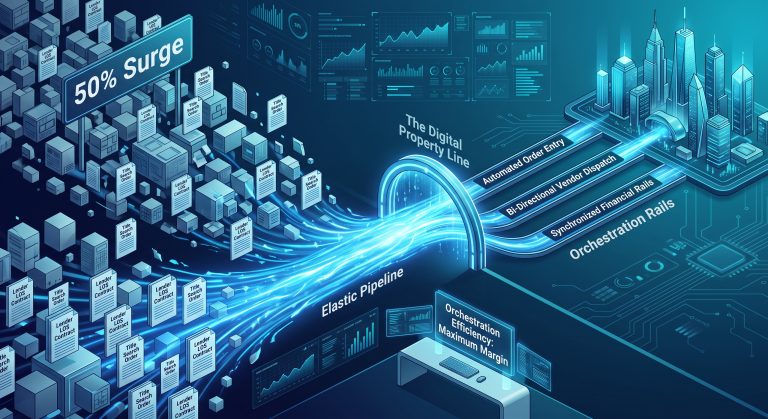
While agencies invest heavily in cloud encryption and SOC 2-certified core systems, daily escrow operations still rely on manual data transit. Every time an employee manually moves sensitive information from an external portal or email into a Title Production System (TPS), non-public data crosses the Digital Property Line unprotected. Transforming data from an operational liability into a defensive shield requires addressing the workstation perimeter where compliance breaches silently occur.
The Workstation Perimeter: Clipboards and the “Downloads” Minefield
The most significant security gaps in title operations rarely happen inside the core TPS. They occur in the “last mile” of data handling on processor desktops.
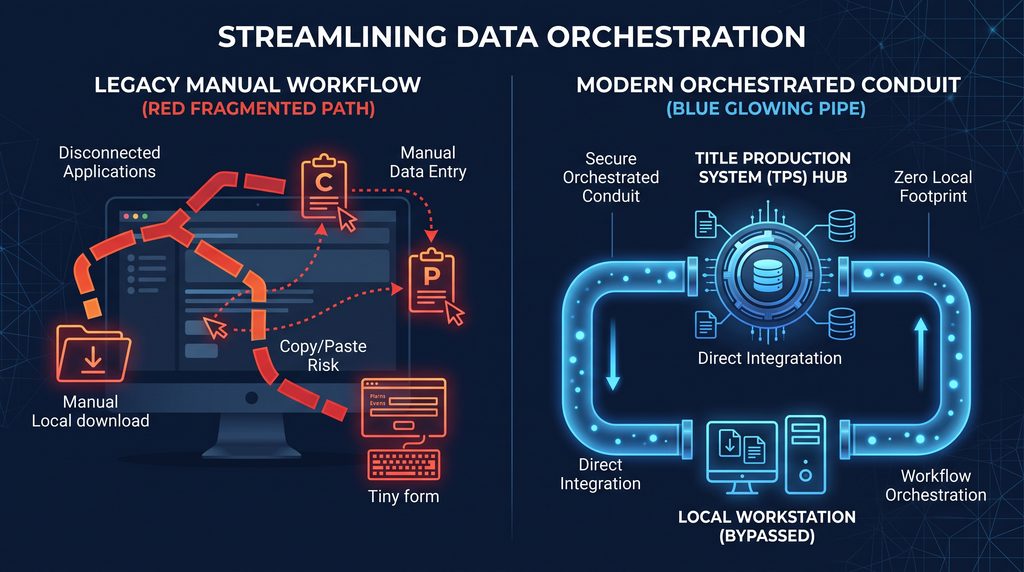
When processors evaluate incoming payoffs, search packages, or wire details without automated connectivity, they resort to manual workarounds. This creates two distinct physical security risks on the local workstation:
- The Local “Downloads” Folder: When staff members download unencrypted PDFs, search abstracts, or bank statements from third-party vendor portals to view them, those files reside on local hard drives. Over time, the local “Downloads” directory becomes an unmonitored repository of unencrypted NPI, accessible to local malware or unauthorized workstation access [1].
- The System Clipboard Exposure: Moving data manually requires constant copy-pasting (Ctrl+C / Ctrl+V). Operating system clipboards store plain text in temporary memory. Malicious scripts or rogue browser extensions can easily harvest unencrypted Social Security numbers, wiring details, and loan amounts straight from active workstation clipboards.
This manual data transport acts as a voluntary “Swivel Chair Tax”—wasting up to 40% of an employee’s productive time while expanding your agency’s attack surface with every keystroke.
Regulatory Escalation: FinCEN Mandates and ALTA Best Practices
The urgency to eliminate manual data handling is no longer just an internal risk discussion; it is a regulatory requirement. Federal oversight of real estate transactions has reached unprecedented levels.
Under updated Financial Crimes Enforcement Network (FinCEN) real estate transparency frameworks, settlement agents face heightened reporting obligations regarding beneficial ownership and non-financed residential transfers [2]. Capturing and submitting this elevated volume of NPI requires absolute data integrity.
Concurrently, Pillar 3 of the American Land Title Association (ALTA) Title Insurance and Settlement Company Best Practices mandates strict privacy and Information Security Programs for protecting NPI [3]. Relying on unencrypted local downloads, email attachments, or manual clipboard transfer directly jeopardizes compliance audits and underwriter authorizations.
Closing the Gap Through Workflow Orchestration
True security is not achieved by adding another login portal or forcing staff to manage separate fraud-checking software. Every additional portal creates a new credential for hackers to target and another island of isolated data.
The solution is Orchestration—replacing manual transit with an agnostic digital conduit that connects specialized utility vendors, lenders, and banking cores directly to your system of record:
- Zero Local Footprint: Automated document extraction and mapping pass closing data, payoff details, and search intelligence directly into the TPS ledger without saving files to local workstation folders.
- Clipboard Bypass: Bi-directional data rails push verified order details, CPLs, and policy jackets straight into the file, eliminating the need for manual copy-pasting.
- Audit-Ready Compliance: Direct platform-to-platform transit creates an unalterable, automated audit trail for every NPI data exchange across your operational perimeter.
By orchestrating your software stack, Title Production Systems remain the secure “Command Center.” Data moves seamlessly through encrypted pipelines, eliminating workstation vulnerabilities and transforming your compliance posture into a competitive market advantage.
References
- FBI Internet Crime Complaint Center (IC3). (2025). Internet Crime Report.
- Financial Crimes Enforcement Network (FinCEN). (2025). Real Estate Transparency Rule and Anti-Money
- American Land Title Association (ALTA). (2025). Title Insurance and Settlement Company Best Practices Framework.
Go beyond the blog. Read our complete neuro-ergonomic analysis on how portal fatigue overloads working memory, why app-toggling quietly drains 9% of your annual processing payroll, and how orchestration reclaims your title automation ROI.