The Cost of Compliance: Turning Regulatory Reporting into an Automated Asset
In the modern title and escrow landscape, compliance is often treated as a necessary evil—a defensive overhead cost that systematically slows down processing speed. From manual 1099-S tax filings to underwriter CPL generation and policy jacket requests, processors spend hundreds of hours acting as manual conduits between disconnected web portals and their core Title Production System (TPS). However, forward-thinking operations leaders are realizing that automated regulatory reporting isn’t just about avoiding audit penalties—it’s about turning mandatory compliance tasks into a high-speed operational asset.
When regulatory data flows bi-directionally between your partners and your system of record without human intervention, compliance transforms from an administrative bottleneck into an efficiency engine.
The “Swivel Chair Tax” on Regulatory Compliance
Every time an escrow officer leaves their native TPS to log into an underwriter portal, key in property parameters for a Closing Protection Letter (CPL), or manually transcribe 1099-S tax reporting details, your agency pays a steep voluntary levy: the Swivel Chair Tax.
While these regulatory tasks are individually non-negotiable, handling them manually outside the system of record creates severe operational vulnerabilities:
- Context-Switching Drag: Forcing processors to jump between browser tabs to request policy jackets or verify CPL coverage breaks workflow momentum and drains mental energy.
- Data Re-Keying Errors: Transcribing Social Security numbers, legal descriptions, or loan amounts across external web forms inevitably introduces typos, leading to post-closing corrections and audit exceptions.
- Perimeter Security Risks: Copying Non-Public Personal Information (NPI) onto local system clipboards or unencrypted spreadsheets to complete tax reporting exposes sensitive data beyond your secure operating perimeter [1].
According to industry workflow benchmarks, title agencies lose dozens of billable hours per month purely on manual compliance data entry [1].
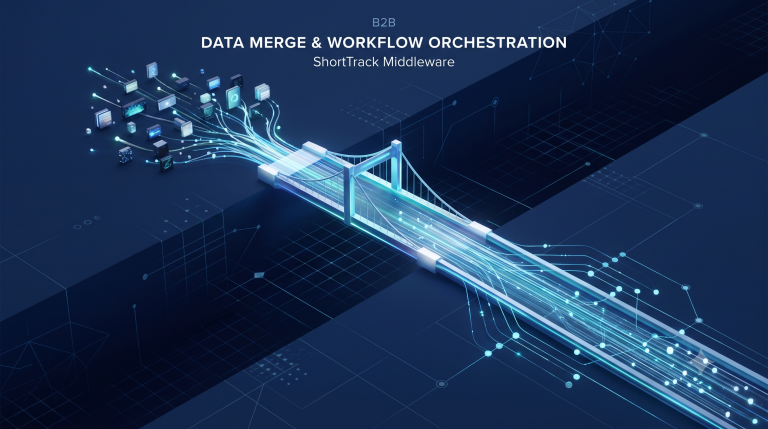
The problem isn’t the regulatory requirement itself—it is the broken bridge between your primary platform and your compliance destinations.
The Triad of Compliance Friction: CPLs, Jackets, and 1099-S
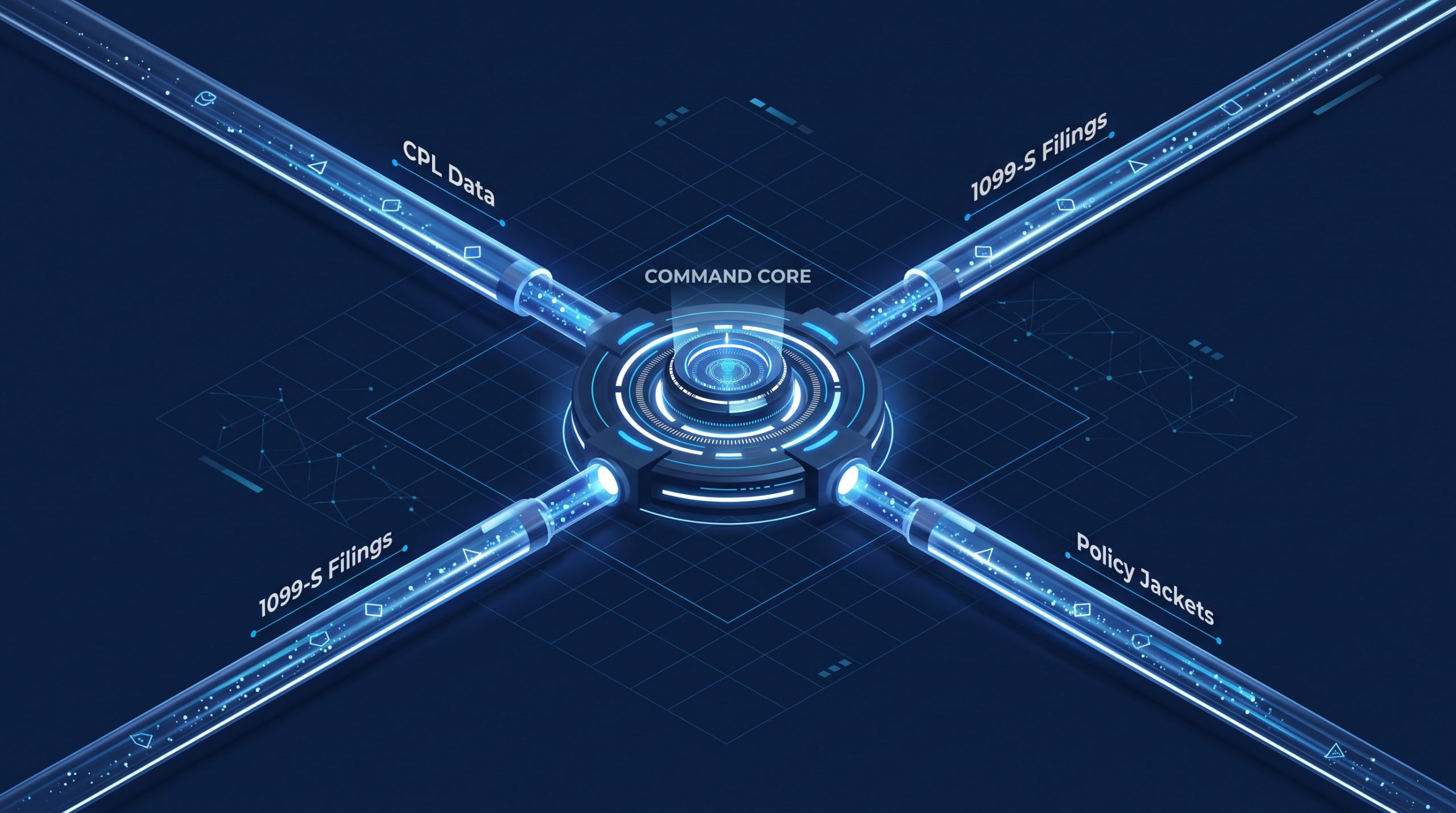
To understand how orchestration cures compliance fatigue, we must look at the three biggest regulatory friction points in the settlement workflow:
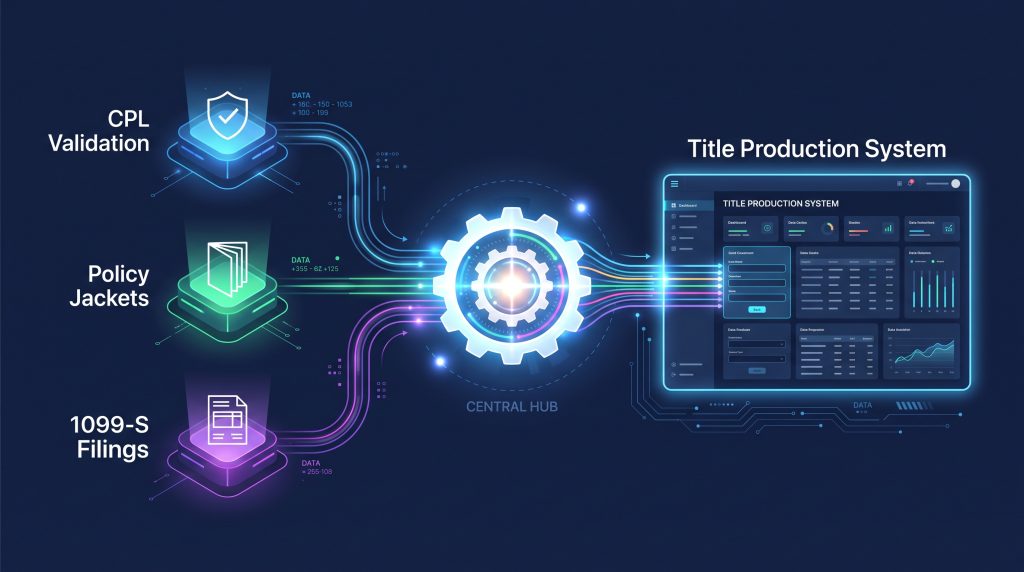
- Closing Protection Letters (CPLs)
Generating a CPL should be an instantaneous background event. In a manual environment, however, processors must pause file production, open an external underwriter platform, re-key buyer, seller, lender, and property details, and download a PDF back to their local desktop folder. - Policy Jacket Issuance
Obtaining policy jacket numbers at closing often encounters similar friction. When jacket allocation requires manual portal logins or batch file uploads at the end of the month, agencies face audit delays, unissued policy backlogs, and friction with underwriter reps. - 1099-S Tax Reporting IRS 1099-S reporting requires meticulous accuracy. Manually extracting seller proceeds, taxpayer identification numbers, and real estate tax information across multiple web forms creates immense end-of-year stress and costly filing corrections.
Orchestration Over Integration: Returning Data to the System of Record
Many technology providers offer basic “integrations” that push data out in one direction. But one-way data entry only solves half the problem. True operational velocity requires orchestration—a bi-directional conduit that pushes parameters directly out of your TPS and pulls authenticated results straight back into the file ledger.
By deploying agnostic middleware, your compliance workflow transforms completely:
- Parameter Export: When loan and title parameters are updated in your TPS, the middleware automatically transmits the necessary data payloads to the underwriter or reporting authority.
- Instant Verification: The underwriter’s core validates the request in milliseconds.
- Automated Return: Validated CPL documents, official policy jacket numbers, and 1099-S filing confirmation tokens are pushed directly back into your TPS file attachment repository.
Studies on enterprise workflow automation show that replacing manual portal transfers with bi-directional orchestration reduces operational processing overhead by up to 45% [2]. Your staff never leaves their primary screen, no data is re-keyed, and your system of record remains the undisputed single source of truth.
Turning a Cost Center into a Competitive Advantage
When you automate regulatory data flows, compliance ceases to be a speed bump. Instead, it becomes a compelling commercial differentiator:
- Unmatched Turnaround Times: Delivering validated CPLs and policy jackets to lenders in seconds rather than hours makes your agency the easiest partner to do business with.
- Audit-Proof Operations: Complete, time-stamped compliance logs are automatically captured within the file ledger, drastically simplifying underwriter audits and CFPB/ALTA examinations.
- Staff Liberation: Escrow officers are freed from administrative data-entry clerk duties, allowing them to focus on high-value client relationships and complex title examination.
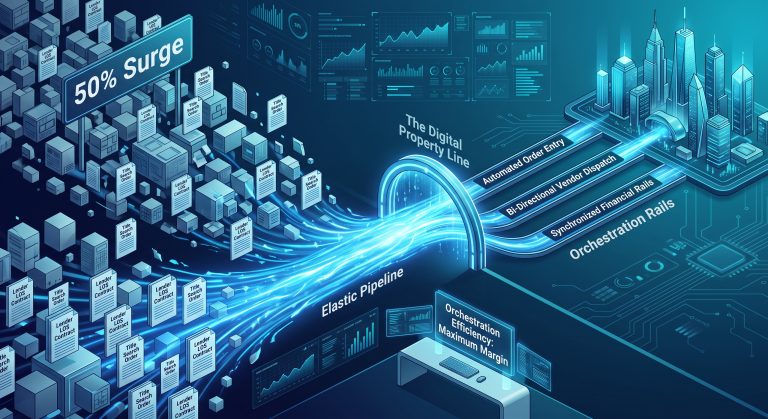
Stop letting mandatory compliance dictate your operational speed. By letting middleware act as the digital conduit across the Digital Property Line, you can automate regulatory reporting and give your core platform the connectivity it deserves.
References
- American Land Title Association (ALTA). (2025). Operational Metrics & Compliance Study. https://www.alta.org/research
- McKinsey & Company. (2025). Automating Compliance Workflows in Financial Services. https://www.mckinsey.com/capabilities/operations/our-insights