What is Middleware? (And Why It’s the Unsung Hero of the Real Estate Transaction)
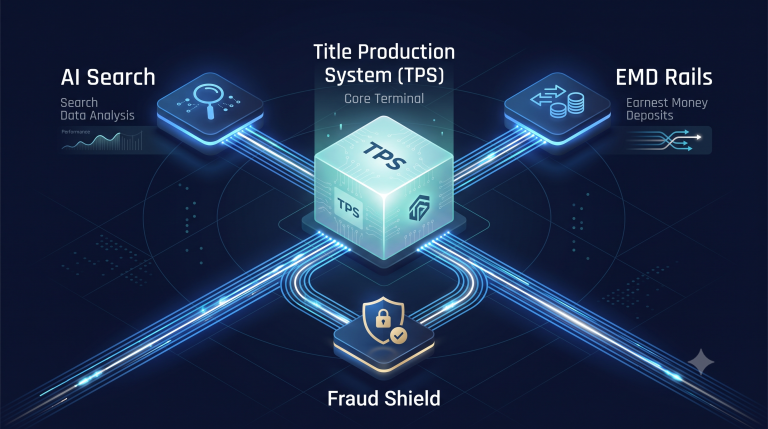
If you look under the hood of the average title agency or lender, you will find a lot of specialized engines. You have a Title Production System (TPS) to drive the closing, a Loan Origination System (LOS) for the lending side, and perhaps dozens of other point solutions for accounting, wire fraud prevention, and digital earnest money deposits.
In fact, modern real estate and title operations with 1 to 500 employees now deploy an average of 172 different applications within their daily footprint [1].
You have invested heavily in these individual software engines. But more often than not, they are spinning their wheels in total isolation. To bridge this gap, forward-thinking operators are asking a fundamental technology question: What is middleware, and how does it fix operational fragmentation?
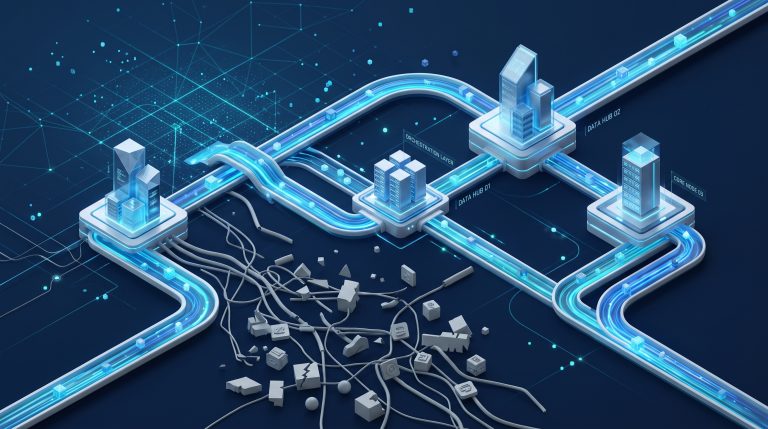
Middleware isn’t the shiny front-end interface you see on your screen, nor is it the massive cloud database where your files are permanently stored. It is not a static storage facility; it is a high-speed transit system. It is the unsung hero that sits quietly between your disconnected platforms, securely moving your data from point A to point B to ensure your technology investments actually work together.
Demystifying the Tech: The Digital Translator
To truly understand what is middleware, it helps to think of your real estate transactions like a global summit. The lender speaks “LOS data.” The title agent speaks “TPS data.” The banking partner speaks “Banking Core APIs.” Without a central translator sitting in the middle of the room, everyone is shouting important transaction details, but nobody understands each other.
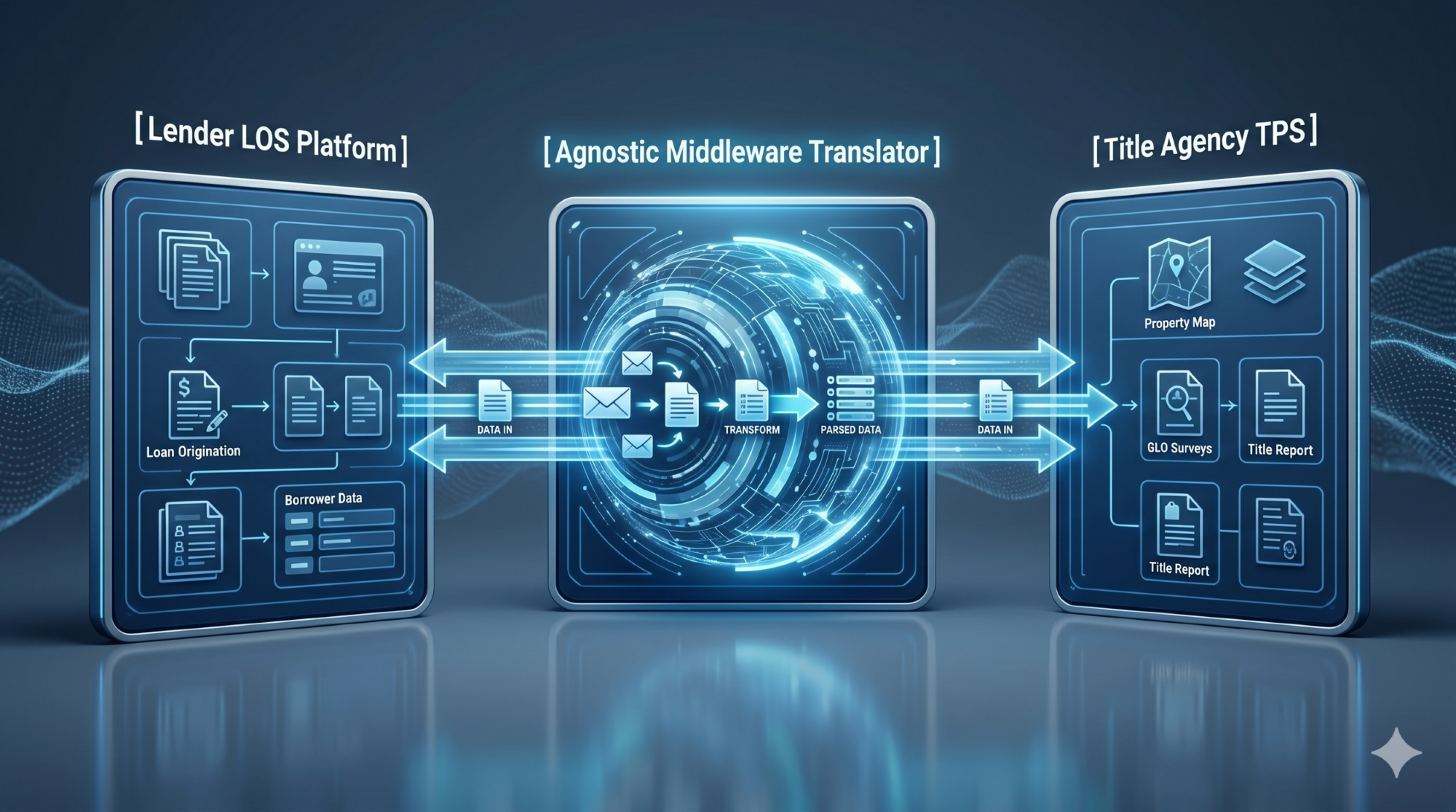
Middleware serves as that universal translator. It allows an external lender to send an order request in their native software language and have it arrive instantly inside your core system as a fully formed file, without an escrow assistant ever having to manually interpret, download, or retype a single line of text.
The Agnostic Conduit of the Title Automation Workflow
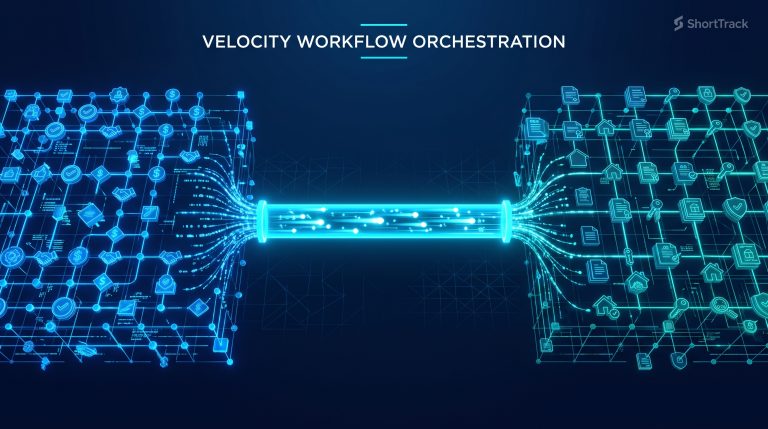
At ShortTrack, we view real estate middleware as the essential conduit of the modern closing. Our core mission is to orchestrate the entire transaction journey—from the real estate agent’s first uploaded contract to the final wire authorization from the banking core.
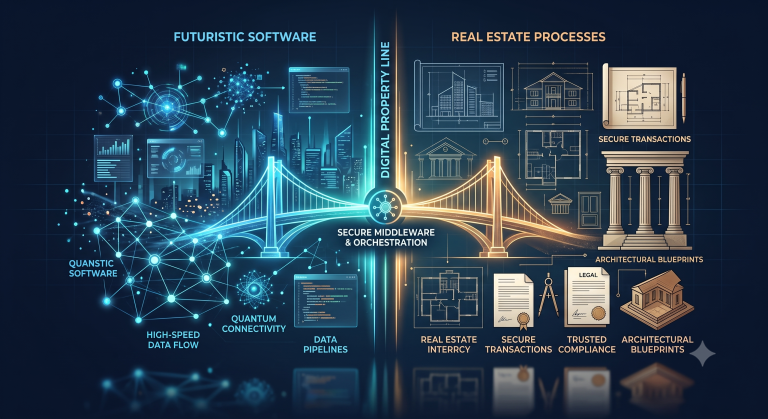
Historically, software applications have existed as isolated islands of excellence, completely lacking the native interoperability needed to share secure data across the Digital Property Line [2]. This technical disconnect forced highly skilled title professionals to act as “human middleware,” manually carrying data from one open browser portal to another. This manual bridge acts as a voluntary “Swivel Chair Tax” [3] on your agency’s growth, introducing severe context-switching delays, keying errors, and endpoint security risks.
ShortTrack acts as the digital nervous system that connects these disjointed parts. When this secure title automation conduit is open, data flows unobstructed across your entire operational perimeter:
- From Real Estate to Title: The transaction begins seamlessly, allowing real estate agents to open orders directly from their transaction management platforms and flow contract data straight into your TPS layout.
- From Lender to Title: Order data, milestone updates, and closing documents move from the lender’s Loan Origination System (LOS) directly into your Title Production System (TPS) instantly.
- From Title to Underwriter: Seamlessly generate CPLs and policy jackets, passing critical data back and forth without ever leaving your primary screen.
- From Title to eSign: As a long-standing partner bridging eSignature platforms and the title industry, we ensure that signing events are triggered automatically and executed documents are pulled right back into the file ledger.
- From Banking to Ledger: Your fintech solutions connect directly to banking cores and the TPS, keeping real-time money movement completely synchronized at funding.
Making Your Long-Term Software Investments Actually Work
Let’s be honest: title agencies rarely change their Title Production System. The immense financial and operational commitments to your core software architecture were likely made years ago, and ripping it out to start over is a massive, disruptive undertaking.
But this structural loyalty often leads to a common executive frustration: “We rely on this incredibly powerful core system, yet my processing team is still completely overworked.”
The problem usually isn’t the TPS itself. The problem is that your system of record has become an isolated island.
You can own the most robust, battle-tested title database in the country, but if there is no automated road connecting it to the ever-changing platforms used by your lenders and vendors, your staff will always be forced to manually bridge the gap. When evaluating what is middleware for an established business, it offers immense strategic value regardless of where you are in your software journey:
- If you are staying put: Middleware breathes entirely new life into your existing infrastructure. You don’t need to endure a costly, multi-month system migration just to get modern title automation. ShortTrack gives your current system the comprehensive connectivity it lacks, maximizing the long-term ROI on the technology you already own.
- If you are upgrading or changing systems: For those agencies preparing to migrate to a new TPS platform—or those who recently have—middleware makes the transition painless. By routing your integrations through a central network hub, you eliminate the headache of rebuilding your vendor connections from scratch. Because your lender and utility pipelines live in our agnostic hub instead of being hardcoded to a specific TPS, your integrations seamlessly move with you to your new platform.
The Invisible Operational Advantage
The Invisible Advantage
Great middleware should be fundamentally boring. You shouldn’t have to log into it, look at it, or manage it every day. It should simply run seamlessly in the background of your business, ensuring that when a external partner updates a loan amount or uploads an inspection, your internal system of record updates automatically.
It is the unsung hero of real estate operations because when it works perfectly, you don’t notice the code running—you simply notice that your turn times dropped, your manual errors disappeared, your compliance perimeter became secure, and your overall transaction speed doubled.
Stop letting your software investments sit in isolated silos. Let ShortTrack be the conduit that brings your tech stack to life. Contact us today to learn how we can connect your ecosystem.
References
[1] Zylo. SaaS Management Index Report. (Documenting macro software sprawl showing that businesses balance an average of 172 to 300+ independent applications within their daily operating footprint).
[2] ShortTrack Industry Insight. The Digital Property Line. (Proprietary strategic framework defining the transactional boundary between internal production software and external utility vendors).
[3] ShortTrack Operational Framework. The Swivel Chair Tax. (Defining the operational cost, productivity penalties, and security risks incurred when employees act as manual data conduits between disconnected software applications).