The Adoption Trap: Why Signed Software Contracts Fail to Deliver Revenue
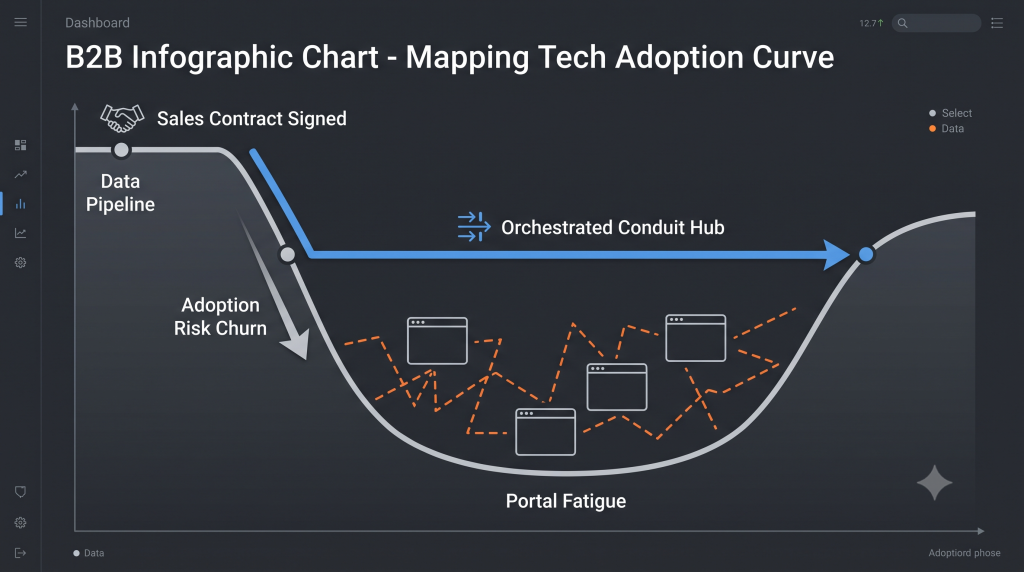
In the evolving world of title automation, every forward-thinking software vendor in the PropTech landscape tracks three distinct phases of client acquisition: sales risk, implementation risk, and adoption risk. Winning the contract clears the sales hurdle. Mapping the APIs clears the implementation milestone. But the third phase—adoption—is where the originally planned revenue either crystallizes into long-term ARR or completely dissolves.
For real estate utility vendors specializing in automated wire fraud prevention, real-time EMD rails, or AI-assisted title search intelligence, the post-sale landscape has become fiercely competitive.
Yet, a recurring baseline failure occurs across the ecosystem. Exceptional software engines are suffering catastrophic user rejection not because their software lacks horsepower, but because they are inadvertently imposing a structural bottleneck on the very people they are trying to serve.
When a tool exists as an isolated platform, it forces highly skilled title professionals to leave their system of record, open a new browser tab, log into a separate portal, and manually ferry data across the Digital Property Line.
This technical disconnect turns your transaction experts into expensive “human middleware,” levying a voluntary Swivel Chair Tax that bleeds efficiency out of the closing room.
The moment a tool requires a processor to manually bridge a disjointed database gap, the software encounters immediate adoption risk.
The Friction Tax: Quantifying User Rejection
To understand why adoption fails, tech vendors and title executives must look at the cognitive architecture of a title office. Small businesses with 1 to 500 employees now manage an average operating footprint of 172 independent applications. According to recent macro metrics on SaaS sprawl, large-scale organizations struggle with more than 305 disjointed software point solutions. [1] As Gupta et al. (2024) highlight in their research on SaaS integration, the pervasive influx of cloud services profoundly affects human operational habits—often introducing hidden operational friction when tools operate in silos. [2]
When a vendor pitches a title agency owner, the conversation centers on features and siloed time savings. A fraud guard shield might save ten minutes of file verification; an automated document extraction engine might shave twenty minutes off an exam prep loop.
But if an escrow assistant has to spend twelve minutes manually typing a buyer’s property parameters into that vendor’s proprietary portal, and another eight minutes downloading a data package to copy-paste the exceptions back into their TPS, the “net efficiency gain” is completely neutralized.
The underlying issue is human cognitive load. Independent neuro-ergonomic research published by the American Psychological Association (APA), alongside empirical studies on developer and worker productivity (Meyer et al., 2014; Kohl et al., 2020), demonstrates that multitasking and jumping between disconnected tasks or software environments heavily degrades performance, focus, and overall output quality. [3,4,5] The mental blocks created by constant context switching can degrade an individual’s productive focus by up to 40%.
Most ground-level operational errors do not stem from a deficiency in processor skill; they are introduced during the manual handoff when data is carried between isolated Islands of Excellence. Escrow staff do not drop tools out of defiance. They drop them because they are exhausted by the friction of portal fatigue.
Strategic Orchestration: Protecting Vendor ARR and Agency ROI
The solution to adoption risk is a philosophical pivot from integration to absolute Orchestration. In modern system engineering, research on microservices and decoupled architectures (Di Francesco et al., 2019) underscores that managing distributed tools requires seamless structural patterns to avoid fragmenting the ecosystem. [6]
For a vendor, hardcoding custom integrations into a title agency’s legacy TPS is a costly, multi-month engineering nightmare that strips away your product team’s core agility. For the title agency, breaking apart a battle-tested core database to connect a new point solution is an organizational hazard.
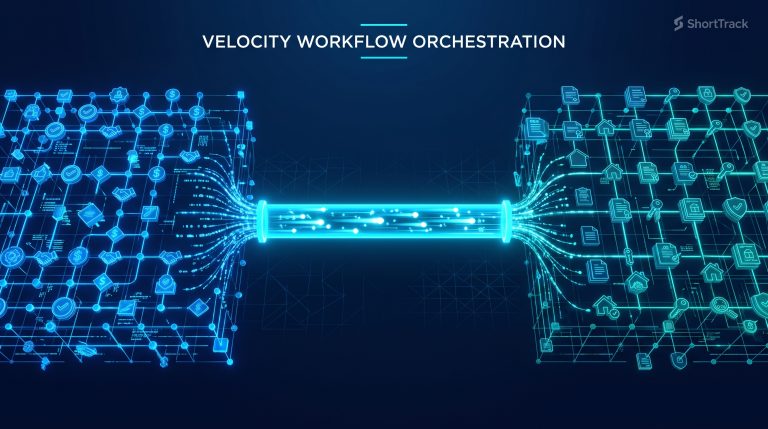
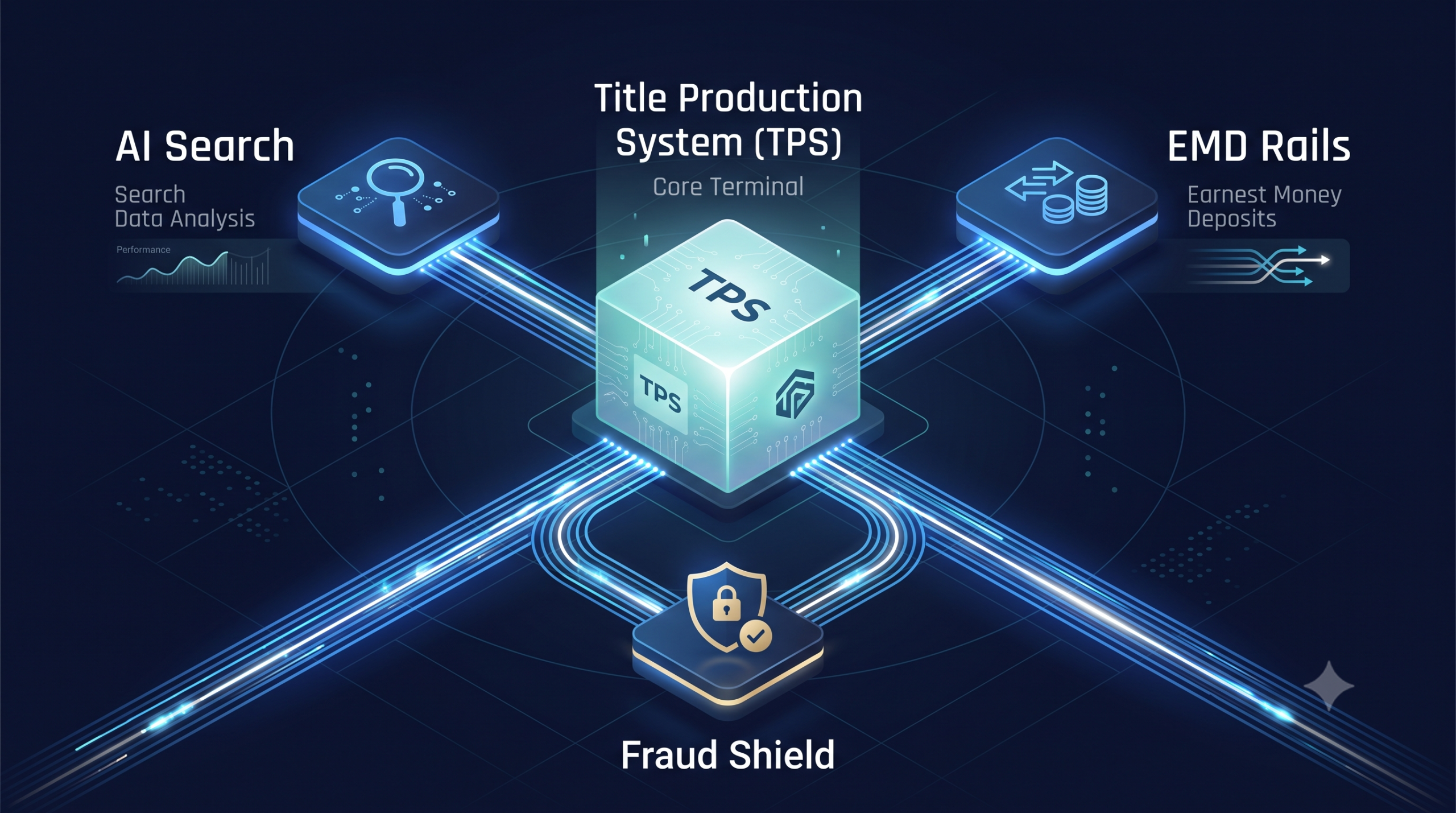
Agnostic middleware acts as the universal translator that resolves this technical standstill. By deploying ShortTrack as the digital nervous system of the transaction, specialized vendors drop their data streams into a single, encrypted conduit that routes directly inside the processor’s primary screen.
When Title Automation is orchestrated rather than simply integrated, the native user experience remains completely undisturbed:
- For the Agency: Escrow teams trigger wire fraud shields, deploy AI title searches, and verify instant earnest money deposits via standard dropdown menus inside their core platform, eliminating workstation toggling entirely.
- For the Vendor: Your software functionality is delivered natively where the closer already lives, audit-proofing your user adoption metrics and locking in your contracted revenue streams from day one.
The future of real estate tech scalability is a team sport played system-to-system, data-point to data-point. Stop building isolated technology islands. Pave the road with secure middleware, protect your users’ cognitive focus, and turn your technology investments into an orchestrated ecosystem.
References
- [1] Zylo SaaS Optimization Data. The Proliferation of Decentralized Software Sprawl. (Documenting enterprise software trends where modern operating environments manage an average footprint of 305+ disconnected point solutions).
- [2] Gupta, M., Gupta, D., & Rai, P. (2024). Exploring the Impact of Software as a Service (SaaS) on Human Life. EAI Endorsed Transactions on Internet of Things, 10.
- [3] American Psychological Association (APA). Multitasking and Cognitive Switching Costs. (Quantifying the 40% performance penalty and working memory depletion caused by constant shifting between disparate software layers).
- [4] Meyer, A. N., Fritz, T., Murphy, G. C., & Zimmermann, T. (2014). Software developers’ perceptions of productivity. Proceedings of the 22nd ACM SIGSOFT International Symposium on Foundations of Software Engineering.
- [5] Kohl, K., Vasilescu, B., & Prikladnicki, R. (2020). Multitasking Across Industry Projects. Proceedings of the IEEE/ACM 42nd International Conference on Software Engineering Workshops
- [6] Di Francesco, P., Lago, P., & Malavolta, I. (2019). Architecting with microservices: A systematic mapping study. Journal of Systems and Software, 150, 77–97.
Escape the Adoption Trap: Download the Strategic Architecture Whitepaper
Go beyond the blog. Read our complete analysis on why signed software contracts fail to deliver recurring revenue, how SaaS sprawl turns skilled processors into “human middleware,” and how middleware orchestration guarantees user adoption.