The Toggle Tax: Why Portal Fatigue Destroys Title Automation ROI
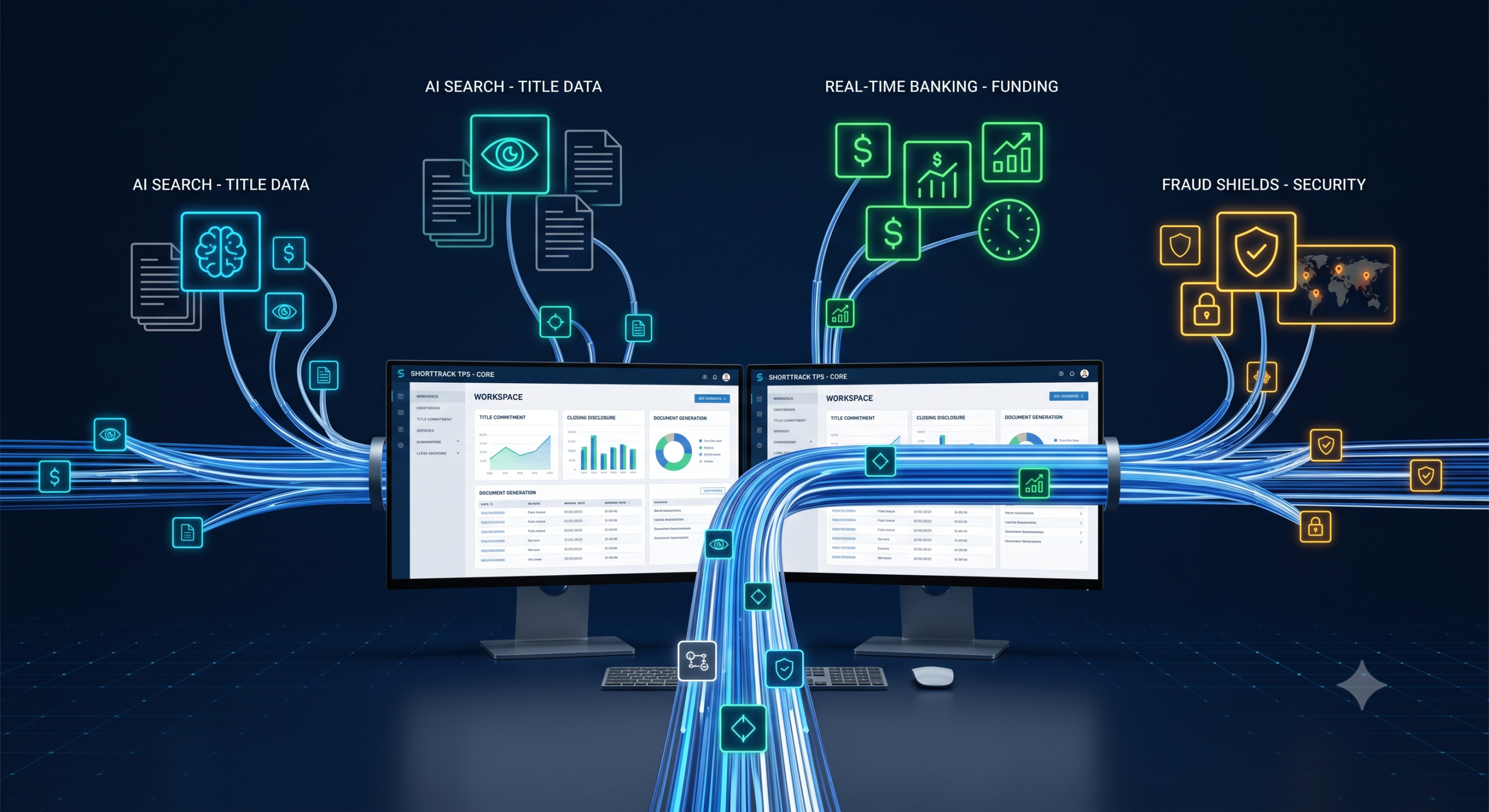
Title automation promises to revolutionize your workflow, yet every title agency executive has lived through a common operational heartbreak. You buy a brilliant, specialized vendor application—perhaps an AI-assisted search platform, a real-time Earnest Money Deposit (EMD) rail, or an autonomous wire fraud prevention shield.
The demo is flawless, the features are revolutionary, and the long-term ROI seems completely guaranteed.
Yet, sixty days post-launch, your processing velocity remains entirely flat. Your escrow officers are quietly bypassing the new software, retreating into comfortable, manual processing habits just to keep their files moving.
When a highly skilled closing team rejects a tool, leadership often misdiagnoses the issue as “user resistance” or a lack of training. But the ground-level truth is far more sympathetic. If a revolutionary software tool forces an escrow officer to leave their native Title Production System (TPS) environment, open another browser tab, and log into an isolated portal, that tool faces immediate operational rejection.
The human mind can only take so much fragmentation before acute portal fatigue sets in. To build a scalable title operation in 2026, we must stop auditing the standalone capabilities of our software vendors and start auditing the cognitive footprint of our data flow. True Title Automation cannot exist on a series of disconnected application islands.
The Hidden Cost of the “Siloed Schematic”
The modern title and settlement services footprint is experiencing an unprecedented architectural crisis. As agency business needs evolve, new specialized applications are brought in to address them—yet older systems are rarely retired.
The result is a highly fragmented tech stack where critical closing data lives in a scattered scavenger hunt across dozens of browser windows. In the tech space, this fragmentation levies a heavy, hidden financial penalty known as the Toggle Tax.
A landmark study published by the Harvard Business Review (HBR) quantified this exact drain on enterprise efficiency, revealing that the average digital worker toggles between disparate applications and websites nearly 1,200 times per single workday [1].
Every single toggle forces an escrow processor to pause, get their bearings, and adjust to a completely different user interface and layout. The HBR data proved that employees spend an average of just under four hours per week simply reorienting themselves after switching between windows.
Over the course of a single year, that micro-friction compounds into five working weeks—or roughly 9% of your total annual payroll—flushed away on the manual mechanics of app toggling.
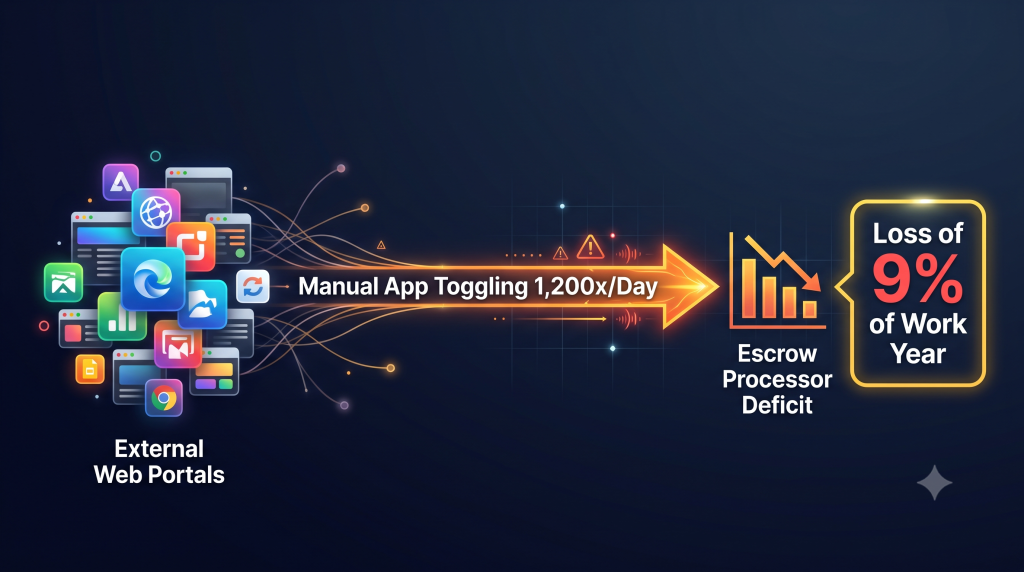
When your processors are trapped spending hours every week hunting down fragmented documents and re-keying data across separate portals, they aren’t utilizing their elite talents to solve complex title problems or clear files to close. They are functioning as expensive, manual data-entry vehicles.
The Cognitive Tax of Portal Fatigue
While the operational loss can be measured in lost hours, the human cost of a disjointed workflow is deeply psychological. Frequent window-switching triggers a massive cognitive drain. A joint technology study conducted by Qatalog and Cornell University discovered that it takes an average of 9.5 minutes for a user to regain a productive, focused workflow after toggling to a different digital application [2].
The human brain does not multitask; it performs rapid task-switching. Research compiled by the American Psychological Association (APA) confirms that chronic context switching overloads working memory and can consume up to 40% of a worker’s productive time throughout the day [3].
Excessive toggling spikes the production of cortisol (the primary stress hormone), leading to an operational environment rife with mental fatigue and “portal burnout”.
In the high-stakes, regulatory perimeter of title insurance, a mentally exhausted processing team is your greatest liability. Most critical wire formatting errors or missed search exceptions do not happen from a lack of technical skill; they happen during the fragmented moments of the manual handoff—precisely when sensitive data is forced to cross the Digital Property Line from one closed browser tab to another.
Resolving the Paradox through Orchestration
The title industry cannot fix this drop in processing velocity by adding more headcount or collecting more standalone software tools. The solution requires a fundamental shift from simple file integration to absolute Orchestration.
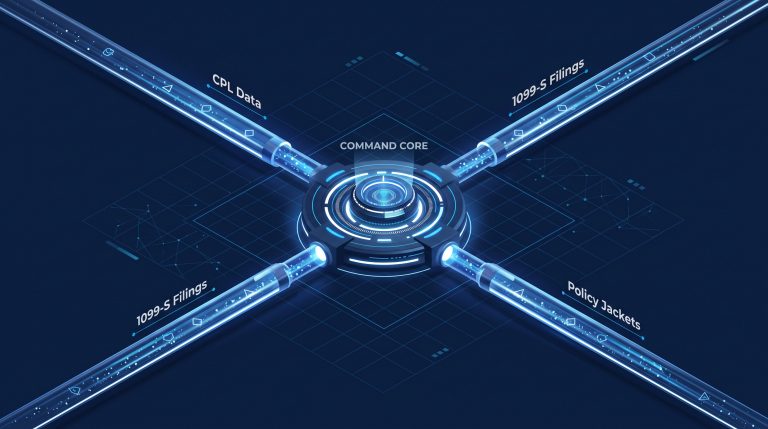
Your core Title Production System (TPS) must remain the undisputed, uninterrupted “Command Center” of your operation. To eliminate portal fatigue and reclaim your lost processing hours, your automated vendor data must be routed directly into that primary screen.
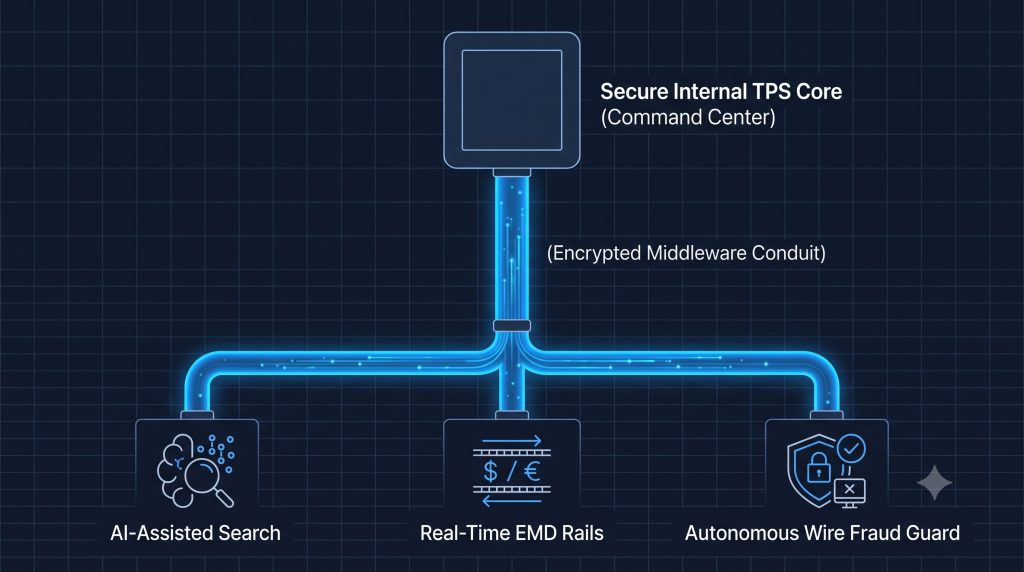
When you utilize an agnostic middleware pipeline like ShortTrack, you transition away from the “portal-first” bottleneck and build a true, unified Title Automation ecosystem.
Instead of forcing your staff to perform the manual bucket-brigade of downloading a report from one site and uploading it to another, orchestration completes the circuit seamlessly behind the scenes.
- AI Search Intelligence: AI-assisted search results and document extractions map straight into your native TPS layout fields without an examiner ever leaving the file.
- Autonomous Fraud Prevention: Wire fraud metrics and verification logs trigger natively, instantly flashing confirmation markers inside your system of record.
- Real-Time Money Movement: Earnest money deposit (EMD) and bank core communication loops operate directly within your ledger, executing background settlement processes automatically.
Reclaim Your Work Year
Technology should be a powerful force multiplier for your closing team, not an administrative tax that fractures their attention span. The title agencies that will dominate the competitive landscape are those that stop collecting isolated features and start orchestrating a connected ecosystem.
Stop forcing your best employees to be human middleware. Repeal the toggle tax, close the digital property line, and let your data flow unobstructed.
References
- [1] Harvard Business Review. How Much Time and Energy Do We Waste Toggling Between Applications? (Quantifying the corporate “Toggle Tax” and documenting that digital workers switch interfaces nearly 1,200 times per day, losing 9% of their annual work time to reorientation).
- [2] Qatalog & Cornell University. The Drain of App Switching. (Documenting that it takes an average recovery period of 9.5 minutes to regain a productive workflow after toggling out of a primary digital task layer).
- [3] American Psychological Association (APA). Multitasking: Changing Costs. (Neuro-ergonomic framework documenting the “40% cognitive context-switching penalty” incurred when human minds ferry data between separate digital task environments).
Repeal the Toggle Tax: Download the Strategic Operations Whitepaper
Go beyond the blog. Read our complete neuro-ergonomic analysis on how portal fatigue destroys software adoption, overloads working memory, and quietly drains 9% of your annual processing payroll.