The Frankenstein Tech Stack: Solving the Post-NS3 Integration Hangover
You are officially back from Kansas City. The energy of NS3 2026 was incredible, your bags are unpacked, and your desk is piled high with business cards and promotional notes. If you are like most forward-thinking title agency leaders, you didn’t just network; you shopped.
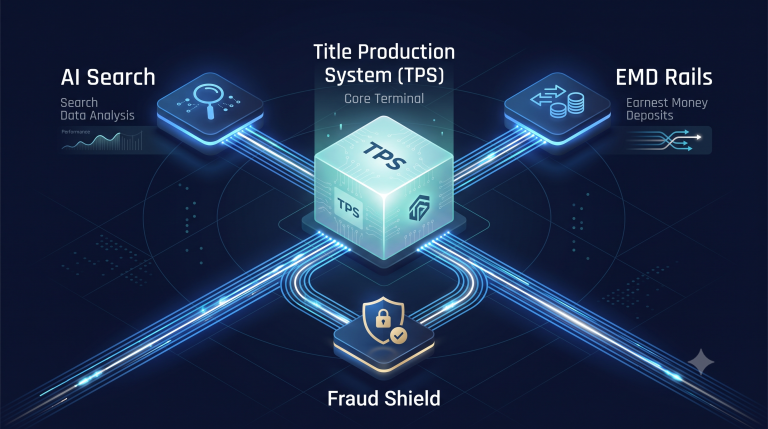
You signed three new contracts. You brought home five new software logins. You have a cutting-edge autonomous wire fraud prevention tool, a lightning-fast AI search intelligence engine, and real-time EMD rails ready to deploy. On paper, your agency has never possessed more capability. True title automation feels closer than ever.
But by Wednesday morning, a familiar operational hangover sets in.
Your processors now have five more browser tabs permanently open. Your closers are logging into separate portals just to check the status of a single data point. Instead of building a streamlined digital assembly line, you’ve inadvertently birthed an operational monster: The Frankenstein Tech Stack.
Anatomy of the Monster: The Disconnected Workflow
There is no shame in this. The desire to equip your team with the best individual tools on the market is exactly what high-performing leaders do. But when specialized tools are brought into an agency without a plan for native connectivity, they become isolated islands of excellence.
Let’s look at what actually happens on the ground during a typical 2026 real estate transaction when your systems are fragmented:
- The EMD Stage: The buyer sends funds via a slick, real-time EMD rail. The portal sends an email alert. Your processor leaves the Title Production System (TPS), logs into the EMD portal, verifies the receipt, downloads the confirmation PDF, and uploads it to the TPS.
- The Search Stage: Your new AI-assisted search intelligence platform identifies an outstanding deed of trust exception in seconds. Brilliant. But because it lives in an external repository, the title examiner has to manually copy the text from the vendor portal and paste it into the legal description of the commitment inside the TPS.
- The Fraud Stage: An autonomous wire fraud prevention tool flags an anomaly in a seller’s wiring instructions. The alert sits in a standalone web dashboard. If the escrow officer doesn’t manually check that specific tab before funding, the guardrail fails.
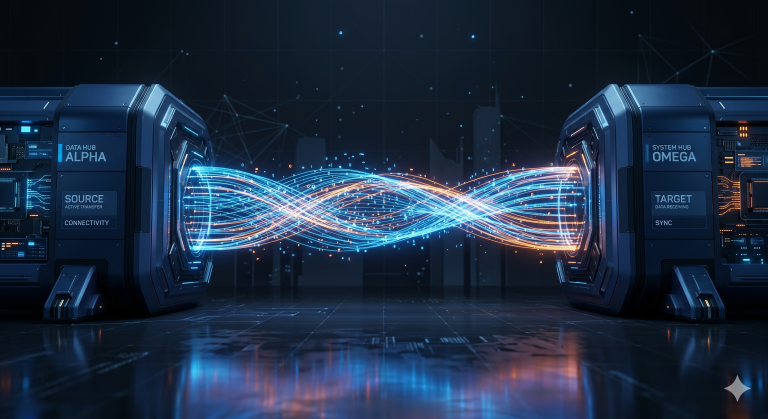
To keep the transaction alive, your staff is forced to manually drag data across the Digital Property Line from one application into another. This turns your highest-paid, most experienced title professionals into expensive, human data-routing conduits. This is the definition of the Vendor Paradox: the concept that adding more specialized software to your agency can actually subtract from your overall operational velocity.
The Macro Math Behind the Madness
This fragmentation isn’t just a title industry friction point; it is a macro-technological crisis across corporate America. Software portfolio sprawl has quietly undermined the very efficiency it promised to deliver.
Data from enterprise SaaS tracking reveals that the average modern organization now manages over 305 separate applications within its operational footprint [1]. When these systems are left unlinked, they create structural data silos that stifle company growth.
The broader technology sector is hitting a massive wall because of this exact problem. The 2026 MuleSoft Connectivity Benchmark Report, which surveyed over 1,050 global enterprise IT leaders, uncovered a staggering reality:
The average enterprise now runs 957 different applications, yet a mere 27% of those applications are integrated [2]. Even worse for those chasing the AI trend: 95% of IT leaders state that data integration issues remain the number one operational hurdle preventing them from successfully realizing ROI on their new automation investments [2].
When nearly three-quarters of your software footprint operates in total isolation, you aren’t running an automated business. You are running a digital scavenger hunt.
The Hidden Security Leak Inside Fragmented Stacks
When we talk about a fragmented tech stack, we often focus on lost time. But as an industry veteran, I am far more concerned about the invisible security vulnerabilities that fragmentation introduces.
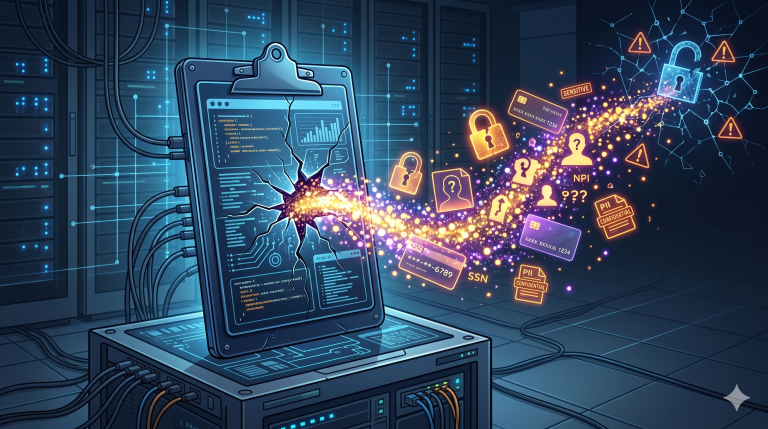
Every time an employee is forced to act as the manual bridge between two systems, they have to move data out of your secure core environment. Think about the daily habits of your processors. To move a document from an external vendor portal into your TPS, they click “Download.”
Where does that document go? It sits in the local Downloads folder of a desktop computer.
That single folder is a compliance minefield. It routinely fills up with unencrypted PDFs containing Social Security Numbers, bank wire instructions, and sensitive Non-Public Personal Information (NPI). If that local machine is compromised, your entire perimeter is breached. Furthermore, relying on unencrypted system clipboards to copy-paste sensitive escrow data across the Digital Property Line invites catastrophic keystroke errors and data leaks [3].
True title automation isn’t just about speed; it is your ultimate defensive line. Security requires that NPI remains entirely encrypted and contained within a closed digital pipeline from origin to destination.
The Human Toll: The 40% Productivity Penalty
Every time you hand an escrow officer another standalone portal login, you aren’t empowering them—you are taxing their cognitive bandwidth. This is what we call “Portal Fatigue.”
When your team has to constantly “Alt-Tab” between your central TPS and external vendor sites to verify an entry or pull an exception, they pay a severe psychological price. Human brains are not designed for rapid context switching. Research from the American Psychological Association (APA) proves that the cognitive cost of shifting between fragmented digital platforms can penalize an employee’s productive time by up to 40% [3].
This manual data transfer process—the “Swivel Chair Tax”—is precisely where data accuracy breaks down, file turn times stall, and employee burnout sets in. You aren’t losing money because your staff is slow; you are losing money because you are paying title experts to act as manual data entry clerks.
The Road to Recovery: Orchestration and Vendor Agnosticism
So, how do you cure the post-conference integration hangover without canceling your new contracts or firing your vendors? You shift your mindset from integration to Orchestration.
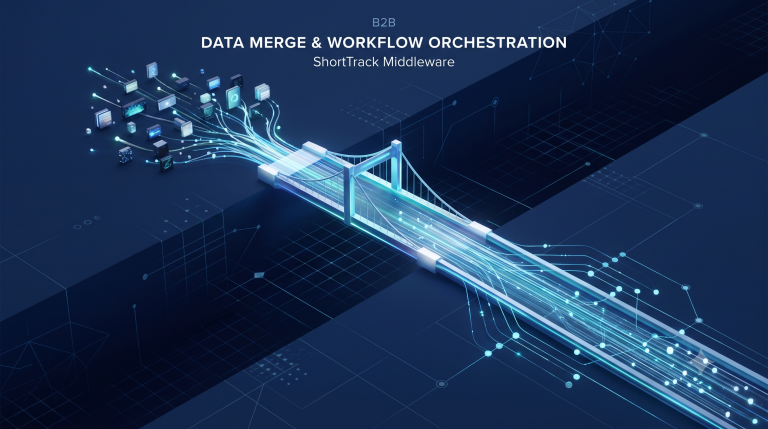
The solution is not to build rigid, expensive, custom point-to-point connections to every new vendor you met in Kansas City. That simply creates “Integration Debt”—brittle pipelines that break the moment a vendor updates their code or changes their API payload. Instead, you deploy an agnostic middleware layer right on your digital perimeter [4].
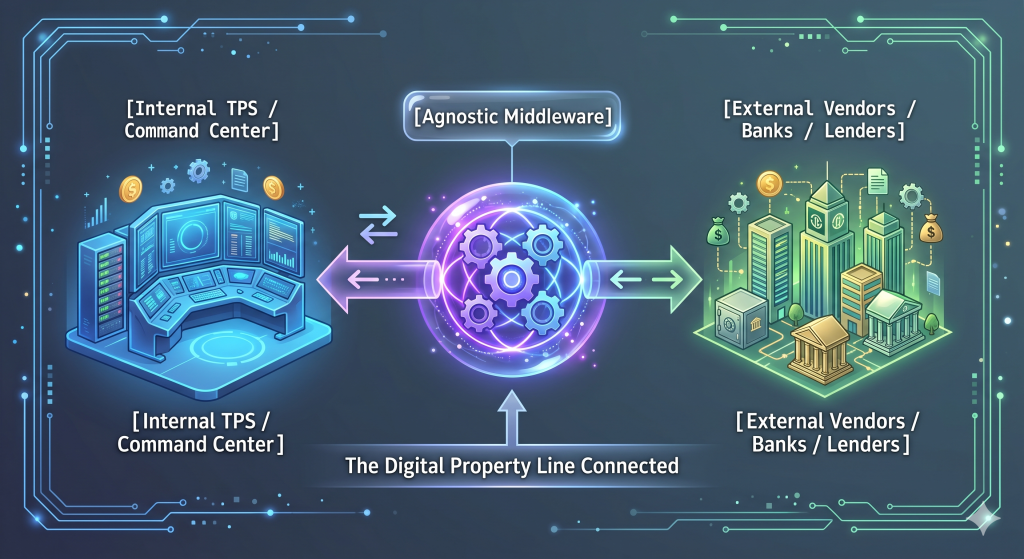
By using an agnostic conduit like ShortTrack, you connect your central TPS to a unified network hub. When data shifts on the outside, it translates and populates natively on the inside, bi-directionally, in real-time.
More importantly, true orchestration unlocks Ecosystem Optionality. When your tech stack is orchestrated via a central middleware hub, you gain the operational flexibility to expand and refine your digital footprint over time. Instead of being locked into a rigid framework, you can seamlessly onboard new innovative partners alongside your existing trusted tech providers. The middleware acts as a universal bridge, allowing new capabilities to deploy smoothly without forcing your agency to endure expensive custom re-engineering or frustrating staff retraining on a new interface.
Don’t let your trade show investments sit in isolation. Tame the Frankenstein monster, eliminate the context-switching tax, secure your data pipeline, and let your technology do the heavy lifting.
References
[1] Zylo. Enterprise SaaS Management Index. (Tracking operational software sprawl showing the average modern enterprise manages over 305 standalone internal applications).
[2] MuleSoft / Salesforce. 2026 Connectivity Benchmark Report. (Detailing the global enterprise tech gap where the average organization runs 957 apps, but only 27% are connected natively, identifying integration as the primary barrier to AI adoption).
[3] American Psychological Association (APA). Multitasking: Changing Costs. (Documenting the 40% cognitive and productive time penalty caused by constant platform context switching and digital fragmentation).
[4] ShortTrack Industry Insight. The Digital Property Line and the Security Surface. (Proprietary strategic framework defining the security vulnerabilities of local file downloads and the boundary between internal production software and external utility vendors).