The “Downloads” Minefield: Why Title Automation is Your Best Cybersecurity Shield
Every single morning, your processors and escrow officers sit down at their dual-monitor desks to perform what seems like a standard, harmless transaction routine. They open their Title Production System (TPS) on monitor one, and they open a specialized vendor portal or an email attachment on monitor two. To bring a document across the Digital Property Line, they move their mouse to the external portal, hover over a document, and click a single, ubiquitous button: Download.
In our collective industry push for comprehensive title automation, we often focus heavily on the metric of operational speed. We measure file turn times, order-to-clear ratios, and keystroke reduction. But as a 15-year veteran of the title industry, I am far more concerned with an invisible, highly volatile security liability that this daily “Download” habit introduces.
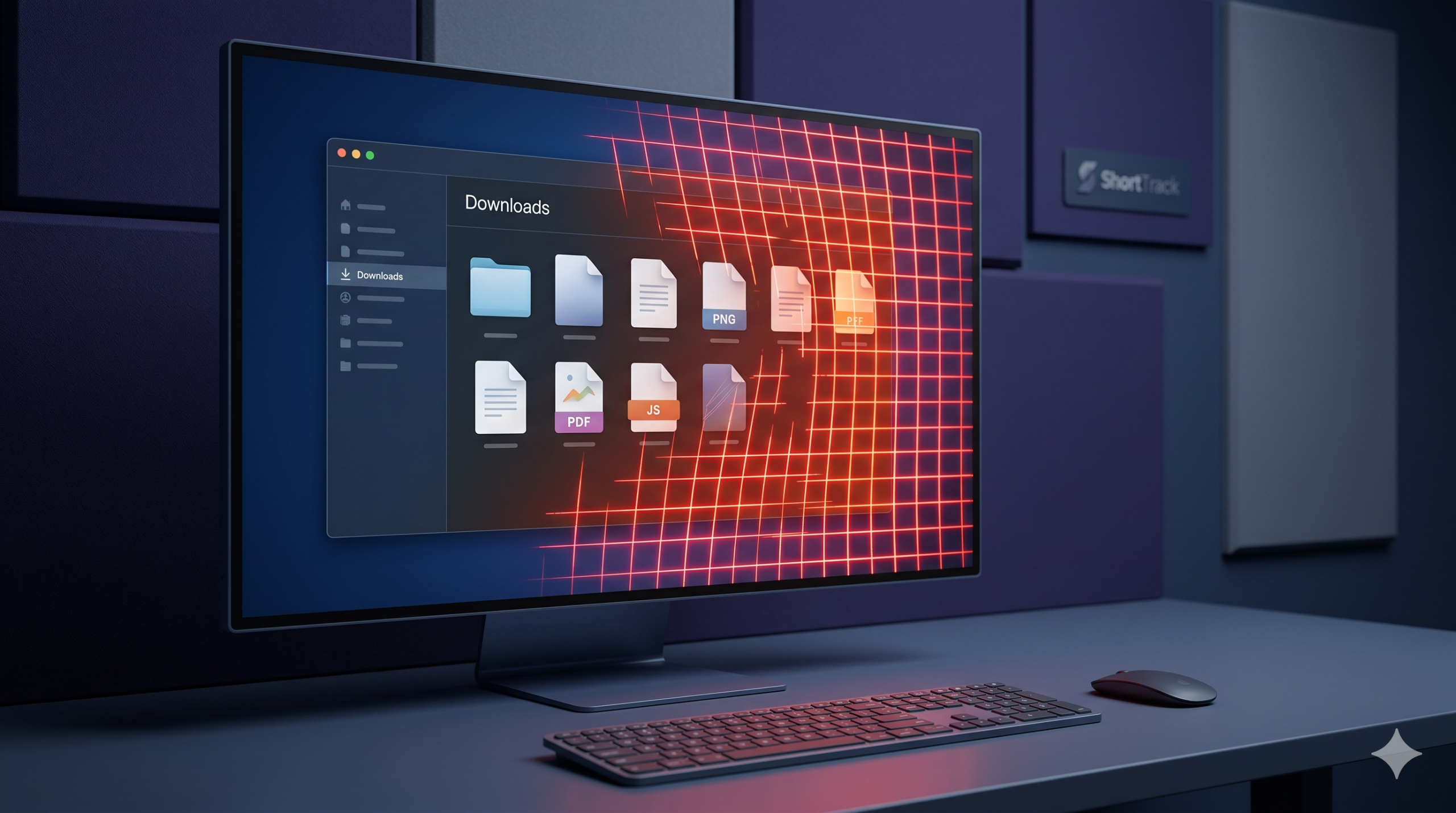
When your staff clicks that download button to move data from a specialized vendor site into your system of record, they aren’t just shifting a file. They are dragging highly sensitive Non-Public Personal Information (NPI) out of a secure cloud environment and dropping it directly into an unencrypted local compliance minefield: the local desktop Downloads folder.
True title automation isn’t merely an efficiency play; it is your agency’s ultimate defensive perimeter.
Anatomy of the Hard Drive Vulnerability
Let’s be deeply empathetic to the “boots on the ground” in our offices. Your title processors are not security engineers; they are file-clearing champions. When they click “Download” on a real-time EMD receipt, a modern AI-assisted search package, or a seller’s digital identification document, they are just trying to get that asset into the core TPS file as quickly as possible.
But from an architectural standpoint, here is where that document actually lands:
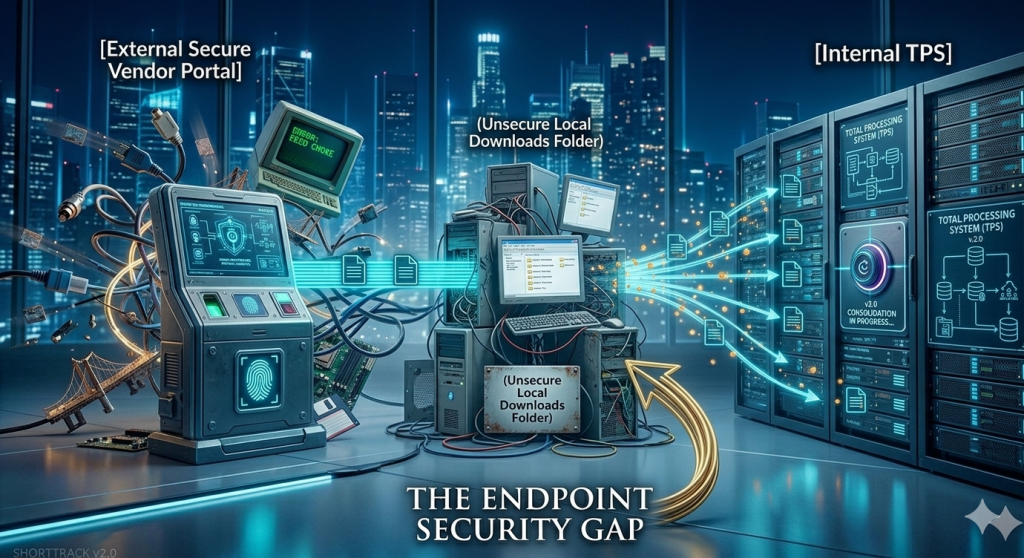
The local computer’s Downloads folder is the wild west of your enterprise infrastructure. It is rarely audited, rarely encrypted, and almost never automatically purged. Over a 30-day period, a single processor’s local drive can accumulate hundreds of unencrypted PDFs containing unredacted Social Security Numbers, bank routing numbers, corporate tax IDs, and loan applications.
If a malicious actor gains access to that single unmanaged workstation via a phishing email or credential exploit, your entire corporate perimeter is instantly compromised. You haven’t just suffered a minor glitch; you’ve suffered an endpoint data breach.
The Silent Leak: The Unencrypted System Clipboard
The “Downloads” folder isn’t the only covert risk vector. The second half of the “Swivel Chair Tax” occurs when your staff acts as human middleware, manually copy-pasting text across different application screens.
Think about how often a closer copies a complicated legal description from an external search tool or a tracking number from a wire fraud prevention dashboard. To transfer it into the TPS, they press Ctrl+C and Ctrl+V.
In software architecture, that data sits in the operating system’s global clipboard. In standard workstations, the system clipboard is completely unencrypted and accessible to any application running on the machine [1]. If a piece of stealthy info-stealer malware is silently resting on that endpoint, it can read the clipboard contents in real-time. A closing officer could accidentally leak wire instructions or verified bank credentials simply by moving them between two open browser tabs.
The Macro Risk: What the Security Data Tells Us
This endpoint security gap is exactly where abstract technology frameworks meet brutal operational reality. Software portfolio sprawl across the real estate lifecycle has expanded our attack surface exponentially.
The 2025 Verizon Data Breach Investigations Report (DBIR) recently evaluated over 22,000 security incidents and 12,195 confirmed breaches, highlighting a terrifying trend for decentralized organizations:
A staggering 60% of all corporate data breaches involve a human element—specifically driven by privilege misuse, social engineering, or miscellaneous data-delivery errors [2]. Furthermore, breaches involving external third-party software connections and unmanaged digital perimeters have doubled year-over-year, skyrocketing from 15% to 30% of all analyzed cases [2].
When your team is forced to act as the manual bridge between disconnected applications, they are operating within that 60% human-error vulnerability window.
According to the 2025 IBM Cost of a Data Breach Report, malicious insider errors and unmanaged data surfaces represent the most expensive attack vectors globally, costing organizations an average of $4.92 million per incident to detect, contain, and legally remediate [3]. In the United States specifically, stricter compliance mandates have driven the average total cost of a data breach to an all-time record high of $10.22 million [3].
The Cure: Closed-Pipe Title Automation Orchestration
You cannot fix this vulnerability by giving your staff more training or scolding them for leaving documents in their local files. Human beings will always choose the path of least resistance to get their work done. If your tech stack forces them to download files to cross the Digital Property Line, they will click download.
The only permanent cure is to automate the conduit itself. You must shift from manual file management to true Title Automation Orchestration.
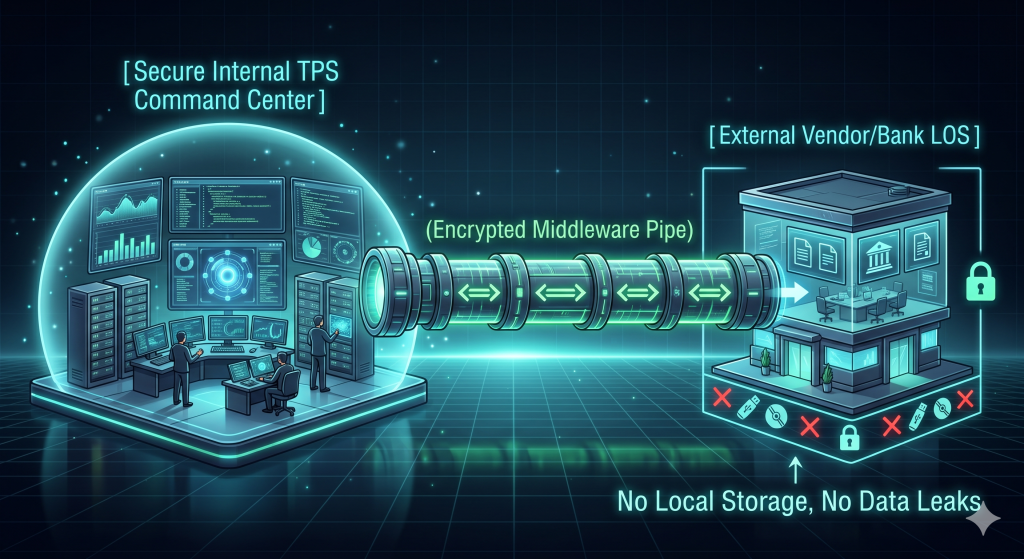
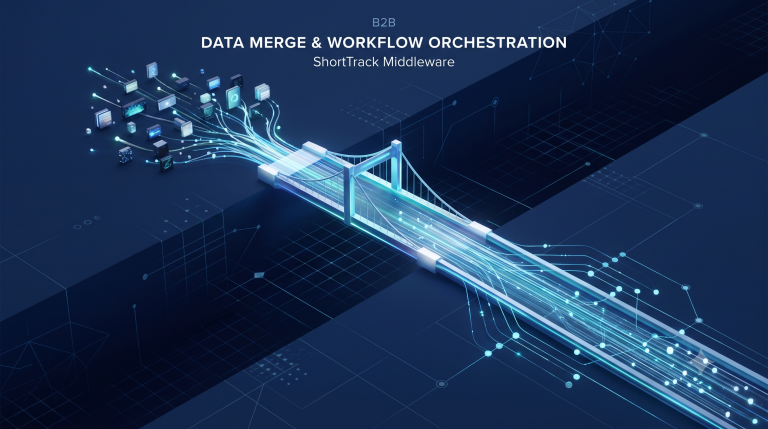
By placing an agnostic middleware conduit like ShortTrack at the heart of your operation, you remove the local desktop from the equation entirely. When an external vendor generates a title package, a fraud verification, or an EMD confirmation, the middleware intercepts the data payload at the API level. It securely translates the file and pushes it directly into your native TPS environment.
The document never touches a local Downloads folder. The data never sits on an unencrypted system clipboard. It moves from secure cloud to secure core through an encrypted, closed digital pipeline.
Securing the Back Half of 2026
As you evaluate your technology footprint for the remainder of the year, stop looking exclusively at user interfaces. Look at the data transit. If a specialized vendor platform requires your team to download PDFs or manually transfer critical transaction elements across screens, it isn’t a complete solution; it’s a compliance vulnerability.
Let’s protect our escrows, secure our perimeters, and eliminate the endpoint tax once and for all by building a unified, orchestrated title ecosystem
References
[1] ShortTrack Strategic Architecture Whitepaper. The Anatomy of Endpoint Clipboard Vulnerabilities inside Legacy Title Systems. (Analyzing data-leak vectors on standard unmanaged processor workstations).
[2] Verizon. 2025 Data Breach Investigations Report (DBIR). (Detailing that 60% of breaches involve human error or delivery mistakes, and third-party risk exposure has doubled to 30% of all cyber incidents).
[3] IBM Security / Ponemon Institute. Cost of a Data Breach Report 2025. (Tracking the record-breaking $10.22 million average US data breach cost and identifying insider operational errors as the costliest vulnerability at $4.92 million per incident).
Protect Your Perimeter: Download the Technical Security Brief
Go beyond the blog. Read our complete architectural analysis on how legacy title offices inadvertently expose NPI through local desktop storage cache and system clipboard vulnerabilities.