The Lender’s Perspective: Why They Prefer “Connected” Title Agents
In an environment where mortgage originators face persistent margin compression and elevated cycle times, lenders are fundamentally changing how they select their title and settlement partners by prioritizing Connected Title Agents. Local relationships and golf outings are no longer enough to secure preferred vendor status. Today, enterprise lenders evaluate settlement agencies through a single operational lens: transactional velocity and data friction.
For a loan officer or processor, every manual touchpoint is a cost center. When a title agency forces a lender’s team to log into an external portal, manually re-key order data, or send documents back and forth over unencrypted email, that agency introduces friction directly into the primary client’s core workflow. The agencies winning lender market share in 2026 are those that eliminate this friction by hardening direct Loan Origination System (LOS) to Title Production System (TPS) data pipelines.
The Lender Margin Squeeze and the Manual Friction Penalty
Lenders are operating under relentless pressure to reduce production costs per loan. According to recent industry benchmarks, the total cost to originate a mortgage remains near historic highs, driven largely by operational inefficiencies and bloated cycle times [1]. Loan processing teams manage dozens of files simultaneously, and forcing them to step outside their primary software environment creates severe operational bottlenecks.
When a title agency lacks direct connection to a lender’s LOS (such as Encompass, Empower, or Byte), the lender incurs a hidden financial penalty on every single transaction:
- The “Toggle Tax” on Processing Staff: Processors lose significant productive hours each week logging into third-party vendor portals to request closing protection letters (CPLs), check commitment statuses, or upload preliminary closing disclosures.
- Data Keying Errors: Manually copy-pasting loan amounts, property details, and buyer names across system perimeters leads to costly post-closing corrections and redisclosure delays.
- Status Friction: Loan originators spend hours on the phone or in email chains chasing basic milestone updates that should update automatically in real time.
Crossing the “Digital Property Line” via Direct LOS-to-TPS Orchestration
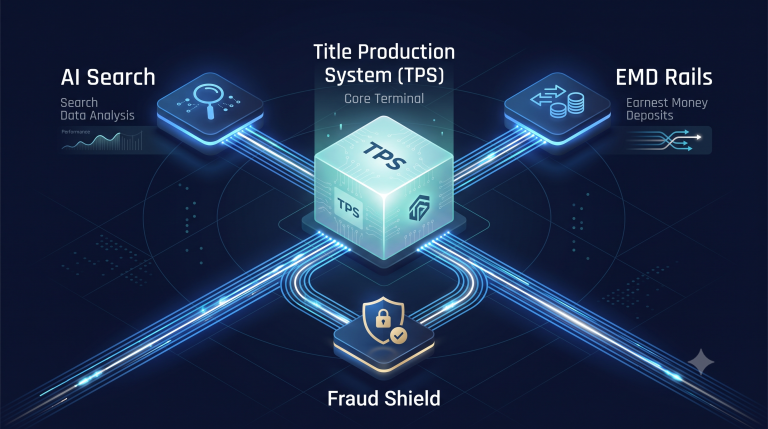
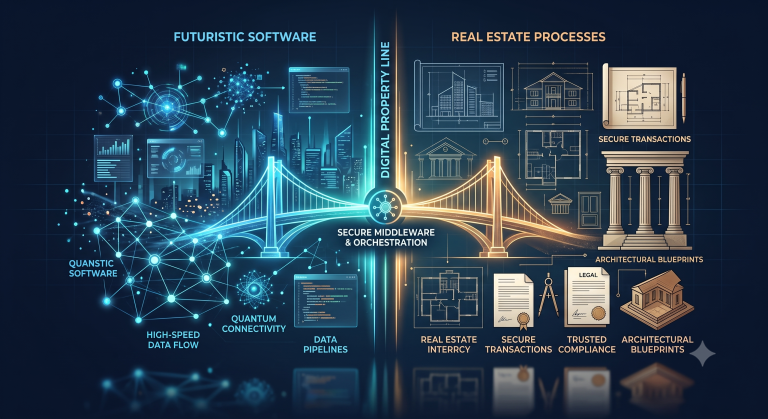
Most title agencies have built powerful internal workflows inside their core Title Production System (TPS). However, even the most optimized TPS hits a natural boundary at the agency’s perimeter—the Digital Property Line [2].
Without a dedicated conduit, these separate platforms sit as isolated “Islands of Excellence.” The lender stays inside their LOS; the title agent stays inside their TPS. Historically, human processors were forced to act as “human middleware,” manually carrying data back and forth across the divide.
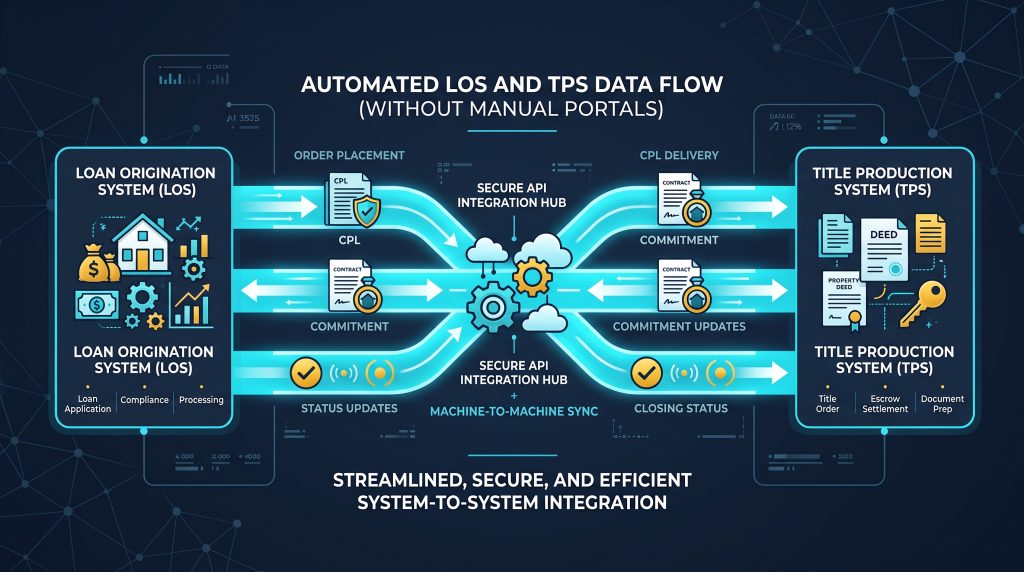
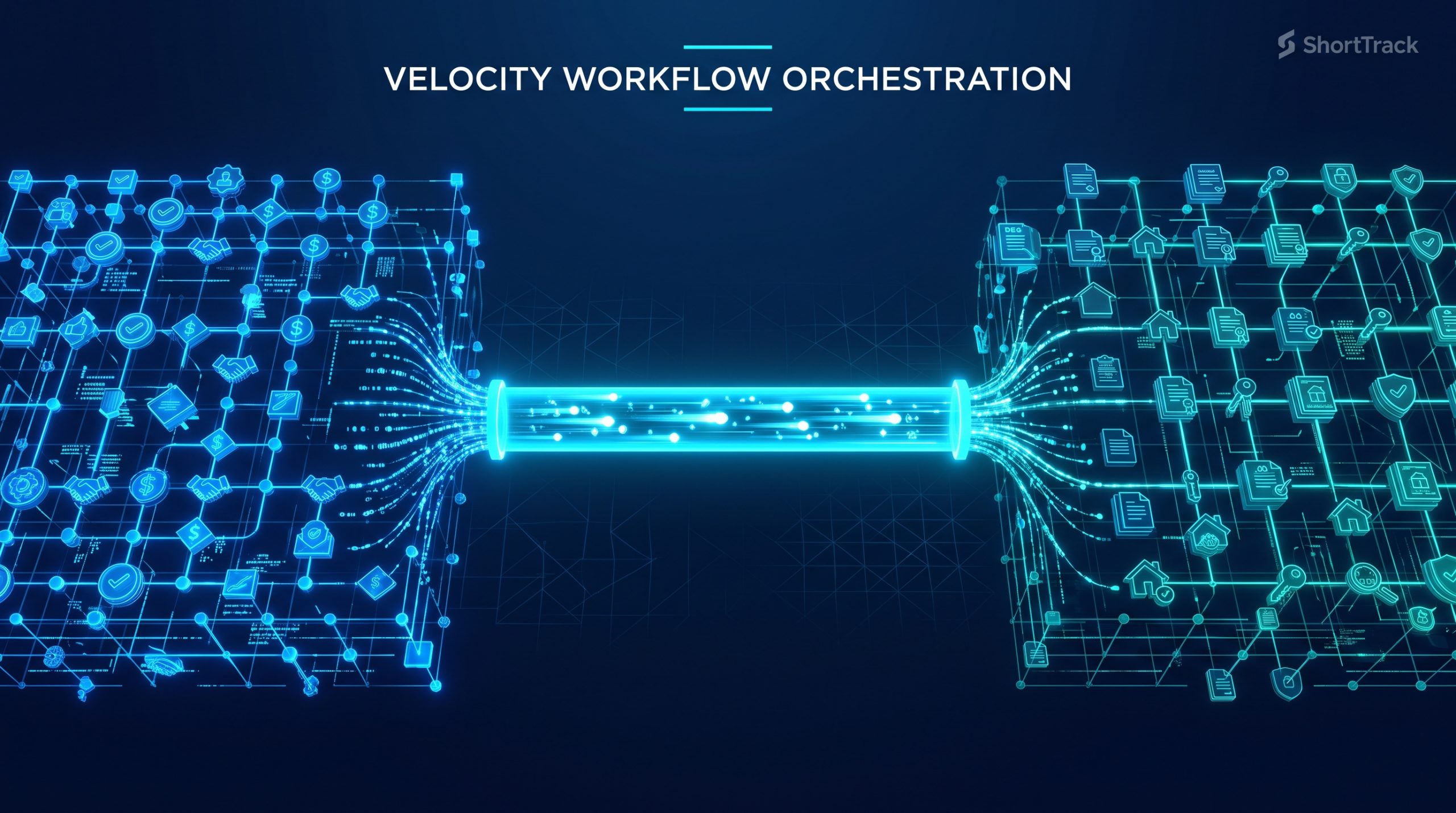
Lenders prefer “connected” title agents because direct LOS-to-TPS orchestration removes the human bottleneck entirely. Studies show that automating document exchange and status synchronizations across B2B platforms cuts overall loan processing times by multiple days [3].
Through bi-directional data flow, a lender can open a title order directly inside their native LOS screen. That order populates instantly inside the title agency’s TPS without manual entry. When the title team generates a CPL, policy jacket, or commitment, those documents—along with real-time milestone statuses—are pushed straight back into the lender’s LOS document folder automatically.
Eliminating NPI Vulnerabilities at the Handshake
Beyond operational velocity, lenders favor connected title agents for a critical compliance reason: cybersecurity and Non-Public Personal Information (NPI) defense.
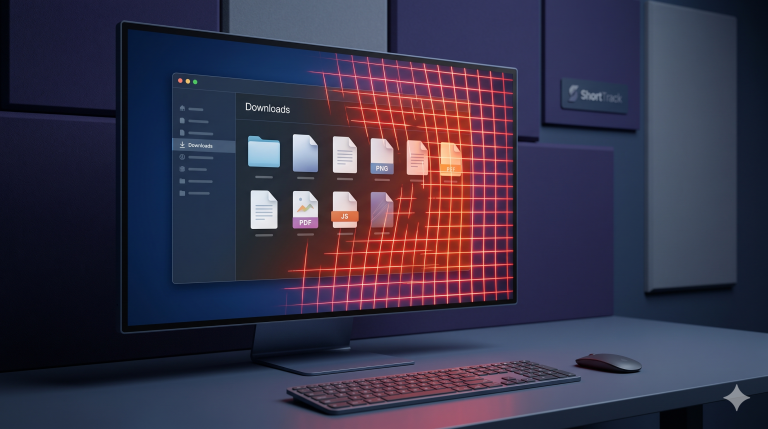
When transaction data and documents are moved manually via email attachments or unencrypted downloads, sensitive borrower data is routinely exposed to local workstation “Downloads” folders and unencrypted clipboards. Lenders face strict CFPB and FTC Safeguards Rule scrutiny regarding vendor risk management.
Direct pipeline orchestration hardens the security perimeter. By routing data packets and encrypted documents through a secure, agnostic middleware conduit, NPI remains protected inside an end-to-end encrypted channel. The lender’s compliance officer receives total auditability without requiring the loan processor to execute manual file security protocols.
Turning Connectivity into Your Primary Sales Moat
If you want to grow your lender business, your sales pitch cannot be limited to “we offer great service.” Every title agency promises great service. Instead, your sales pitch should target the lender’s operational pain.
When pitching prospective lending partners, connected title agencies offer a concrete operational value proposition:
- “We don’t ask your team to log into another portal.”
- “Your loan officers receive instant milestone updates directly inside Encompass/Empower.”
- “Our CPLs and commitments drop straight into your LOS document ledger automatically.”
By framing your agency as an extension of their digital architecture rather than another portal to manage, you transform your operations from a commodity vendor into an indispensable technology partner.
References
- [1] Mortgage Bankers Association (MBA). (2025). Quarterly Mortgage Bankers Performance Report.
- [2] ShortTrack Industry Insight. The Digital Property Line Framework.
- [3] Fannie Mae. (2025). B2B Lender Technology & Mortgage Efficiency Report.