Eliminating the “Dual-Screen Tax”: Reclaiming Staff Hours Through Unified Workspaces
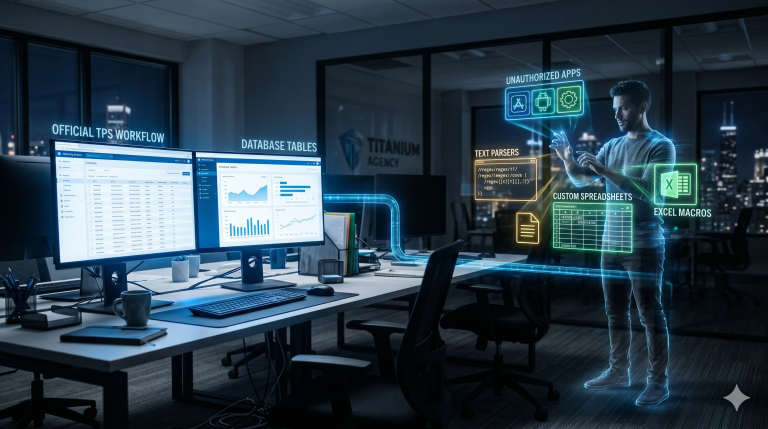
Unified workspaces are the ultimate solution to a familiar, exhausting setup you will instantly recognize in almost any modern title agency: the dual-monitor workstation. On the left screen, an escrow officer is juggling half a dozen browser tabs for property search, tax certificates, and external order portals. On the right screen sits your Title Production System (TPS), waiting for that crucial information to be manually entered.
While this setup was originally intended to make multitasking easier, it has inadvertently created a massive operational bottleneck. Your highly skilled title professionals are being forced to act as “human middleware,” spending their valuable hours reading data from the left screen and typing it into the right. This manual bridge is a voluntary “Swivel Chair Tax” on your agency’s growth and morale.
As we look toward the back half of 2026, the most profitable agencies aren’t the ones adding more screens or disparate portals to the pile—they are the ones eliminating the dual-screen tax through orchestrated, unified workspaces.
The Cognitive Cost of the “Toggle Tax”
While the technical fragmentation is frustrating, the human cost is where the dual-screen tax truly damages an agency. It is easy to calculate the time lost to manual data entry, but the deeper, more insidious cost is the cognitive fatigue placed on your escrow officers.
Every time a team member alt-tabs from their core TPS to a separate browser window to initiate a search or verify a tax certificate, they are forcing their brain to re-index the task at hand. The American Psychological Association (APA) has found that these mental blocks, created by constantly shifting between tasks and platforms, can cost as much as 40% of someone’s productive time [1].
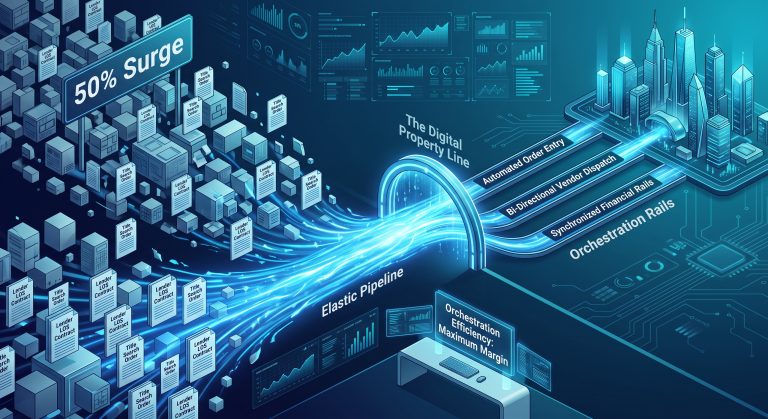
In the high-stakes, detail-oriented environment of title operations, this context-switching isn’t just an efficiency drain—it’s a massive risk factor. Re-keying errors rarely happen because of a lack of skill; they happen during the manual handoff across the Digital Property Line, when focus is broken and fatigue sets in.
Portal Proliferation and Data Silos
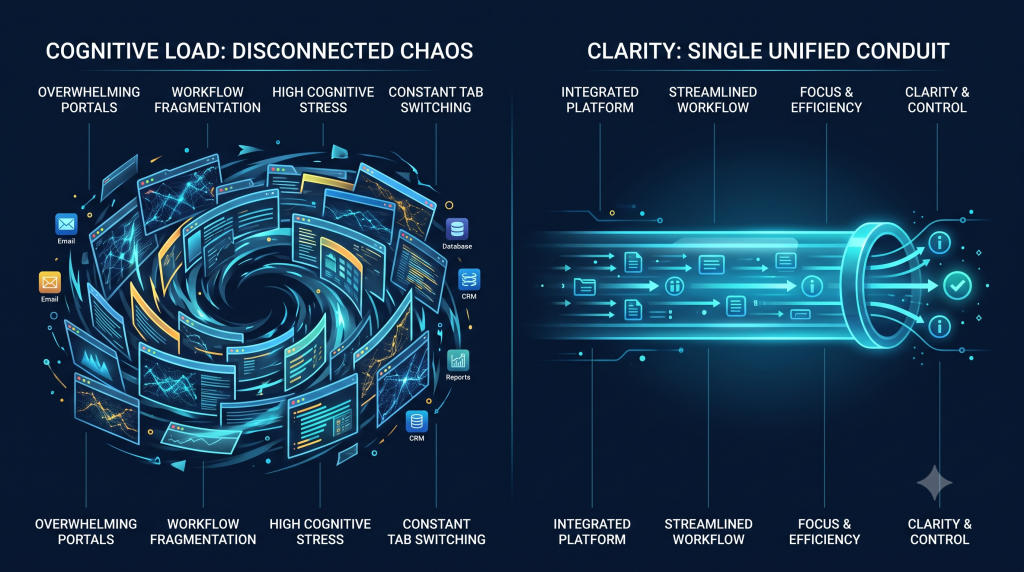
The real estate technology landscape has exploded with specialized solutions for search intelligence, automated document extraction, and tax portals. These tools are undeniably powerful, but without proper orchestration, they lead operators straight into a trap.When tax data lives in one portal, title search in another, and order intake in a third, these brilliantly designed tools become isolated Islands of Excellence. This fragmentation is a classic example of Data Silos—collections of information held by one group that are not easily accessible by others, which severely degrades enterprise efficiency [2]. Without a unified bridge connecting them back to your TPS, you aren’t automating a workflow; you are simply fragmenting your team’s attention and increasing their “Toggle Tax.”
Orchestration Over Integration: Building the Unified Workspace
The solution to the dual-screen tax isn’t ripping out your current TPS and starting over. Your core system is a massive, valuable investment. The cure for portal fatigue is Orchestration.
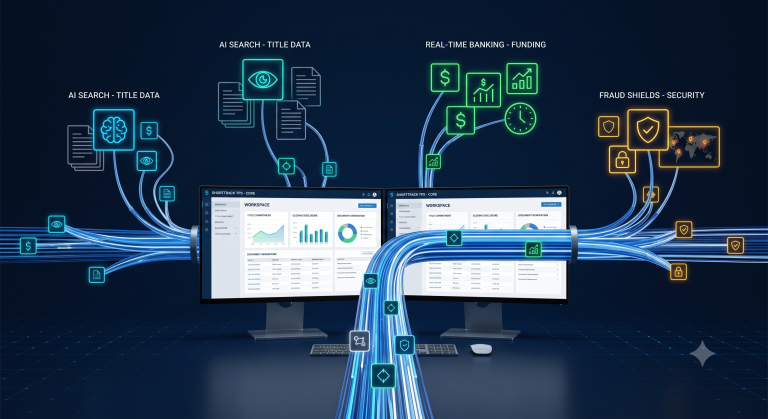
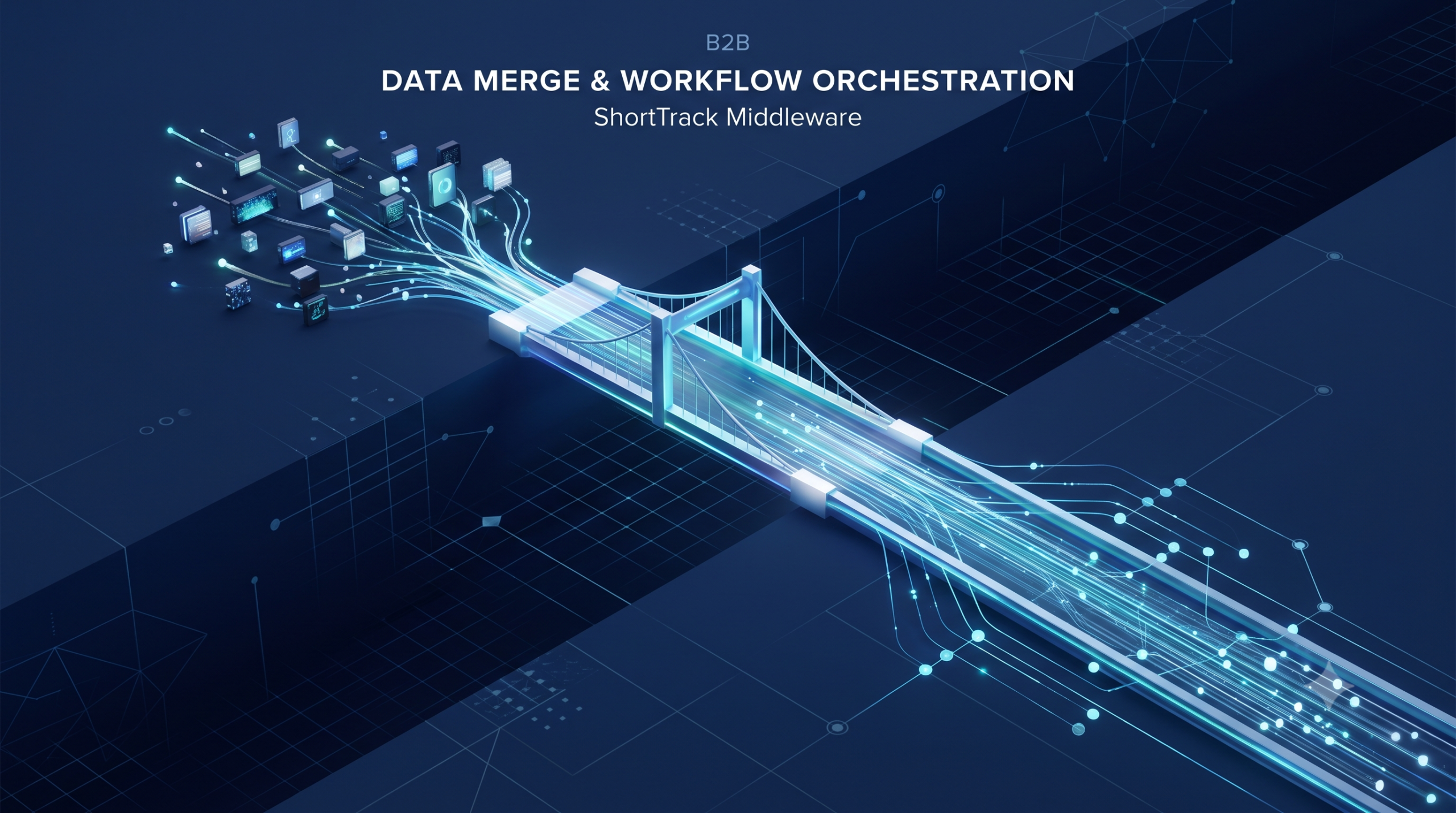
Instead of treating your technology stack as a collection of separate logins, ShortTrack acts as the “Great Unifier,” providing the agnostic middleware required to orchestrate these disparate search, tax, and order portals directly into your native workflow.
When you orchestrate your workspace, data flows unobstructed:
- Search and Data Delivery: High-velocity intelligence from external portals is pushed directly into the TPS file, eliminating the need to download PDFs and re-key parcel numbers.
- Automated Order Routing: Order data moves instantly from the source directly into your core platform, turning data entry into data verification.
- Eliminated Context-Switching: Your staff can trigger external vendor services via a single menu item within their native workflow, neutralizing cognitive fatigue.
Reclaiming Your Most Valuable Asset
Technology should be a force multiplier, not an administrative burden that forces your team to live in two disparate digital worlds. By treating your tech stack as a unified ecosystem rather than a scavenger hunt, you can eliminate the dual-screen tax, eradicate re-keying errors, and protect your team from burnout.
Don’t let your specialized software investments sit in isolation. Let ShortTrack be the conduit that brings your tech stack to life, turning fragmented portals into a single, high-speed unified workspace.
References
[1] American Psychological Association (APA). (2026). Multitasking: Changing Costs.
[2] TechTarget. (2026). Data Silo: Definition, Causes, and Solutions.